Breathwork for Labor, Delivery & Postpartum Support: Safe Techniques for Every Stage
Breathwork can be one of the simplest and most grounding tools available during pregnancy, birth, and recovery. It does not replace medical care, but it can help you work with your body instead of against it. From easing tension in early pregnancy to staying steady through contractions and rebuilding core and pelvic floor awareness after birth, the way you breathe can affect comfort, focus, and emotional regulation in very real ways.
The best part is that many breathing practices are gentle, accessible, and easy to adapt to different stages of the journey. Whether you are preparing for labor, navigating a long night of contractions, or trying to reconnect with your body postpartum, breathwork can offer a practical anchor. The key is choosing the right technique for the moment and keeping safety in mind.
Why Breathwork Matters During Pregnancy, Birth, and Postpartum
Pregnancy and birth place continuous demands on the body and nervous system. Hormonal shifts, physical discomfort, changing posture, sleep disruption, and emotional anticipation can all create stress. Breathwork gives you a direct way to influence your state without adding strain. Slower, steadier breathing can support relaxation, reduce mental overwhelm, and help you feel more present in your body.
During labor, breath also becomes a rhythm tool. Instead of bracing against contractions, a chosen breathing pattern can help you stay oriented, conserve energy, and reduce panic when sensations intensify. In postpartum recovery, breath can support gentle re-engagement of the diaphragm, abdominals, and pelvic floor, which is especially helpful as the body heals and gradually restores coordination.
This is why breathwork is often described as a bridge between body awareness and nervous system regulation. It is not about forcing calm. It is about giving your system a repeatable cue that says, “you can soften, settle, and respond.”
What the Latest Research Says About Breathwork for Labor and Recovery
Research on breathing techniques during labor is encouraging. A 2023 narrative review found that slow, deep breathing during contractions in the first stage of labor, and breathing associated with pushing in the second stage, can reduce pain, anxiety, labor duration, and perineal trauma without adverse effects on newborns. The review also noted that in the late stage of labor, around 7 to 10 cm dilation, slow inhales over 1 to 5 counts, slow exhales over 5 to 1 counts, plus a pause, and then a switch to pursed-lip breathing were beneficial. Source: https://pmc.ncbi.nlm.nih.gov/articles/PMC9822559/
A 2024 meta-analysis of 13 studies found that breathing exercises used in the first stage of labor lowered pain intensity by an average of 1.64 points on the pain scale and reduced the duration of the second stage by about 7.23 minutes. Importantly, no significant adverse events were noted. Source: https://www.sciencedirect.com/science/article/pii/S1876382024000404
There is also evidence that breathing preparation before birth may help. A randomized controlled trial in primigravid women found that antepartum breathing exercises based on the Lamaze method were associated with more spontaneous labor onset, fewer inductions, shorter total labor, and a lower cesarean rate compared with standard care. Source: https://pmc.ncbi.nlm.nih.gov/articles/PMC10359740/
Postpartum research is still developing, but early findings are promising. In women with diastasis recti abdominis, a 6-week core stability plus respiratory technique program started around 42 days postpartum significantly reduced inter-recti distance compared with standard care. Source: https://pmc.ncbi.nlm.nih.gov/articles/PMC11889499/
At the same time, research suggests breathing is best viewed as a support tool rather than a complete substitute for targeted pelvic floor rehab. A 2023 systematic review found that pelvic floor muscle training was more effective than breathing exercises alone for improving pelvic floor strength and issues like urinary incontinence or prolapse, while adding breathing to pelvic floor training offered little additional benefit. Source: https://pubmed.ncbi.nlm.nih.gov/37260116/
Trimester-by-Trimester Guide to Safe Breathing Practices
Breathing practices can be used throughout pregnancy, but the focus may shift as the body changes. Early on, breathwork is often about reducing stress and improving body awareness. In the second trimester, it can support posture, rib mobility, and a sense of spaciousness as the abdomen grows. In the third trimester, the emphasis often becomes comfort, preparation for labor, and nervous system steadiness.
In the first trimester, gentle breathing tends to be the safest choice. Keep sessions short and comfortable. Slow nasal breathing, diaphragmatic breathing, and relaxed exhalations are usually a good fit. Avoid intense breath retention, forceful practices, or anything that creates dizziness or air hunger. If nausea or fatigue is high, even one or two minutes of simple awareness breathing can be enough.
In the second trimester, many people find it easier to work on rhythm. This can be a good time to practice longer exhales, side-lying breathing, and simple pacing exercises that prepare you for labor. You can also use this period to notice how your ribs expand, how your belly moves, and whether you tend to grip in the jaw, shoulders, or pelvic floor when stressed.
In the third trimester, breathwork becomes especially useful for relaxation and labor preparation. This is a helpful time to rehearse patterns that may be used during contractions, including slow counting breaths and pursed-lip exhalations. Some people also like to pair breathing with movement, such as rocking, swaying, or hands-and-knees positions, to make the practice more functional and birth-ready.
For high-risk pregnancies, it is smart to keep practices especially gentle and to check with your care team before trying new techniques. A pilot registered clinical trial has even explored diaphragmatic breathing in high-risk pregnant women, which shows that clinical interest is growing, but it also reinforces the importance of individualized guidance. Source: https://ichgcp.net/clinical-trials-registry/NCT05946252
Diaphragmatic Breathing for Relaxation, Oxygenation, and Body Awareness
Diaphragmatic breathing is one of the most useful foundational techniques in pregnancy and postpartum. It encourages the diaphragm to move more fully, which can reduce upper-chest tension and help the nervous system shift into a calmer state. Many people naturally breathe more shallowly when stressed, so diaphragmatic breathing can restore a steadier, more efficient pattern.
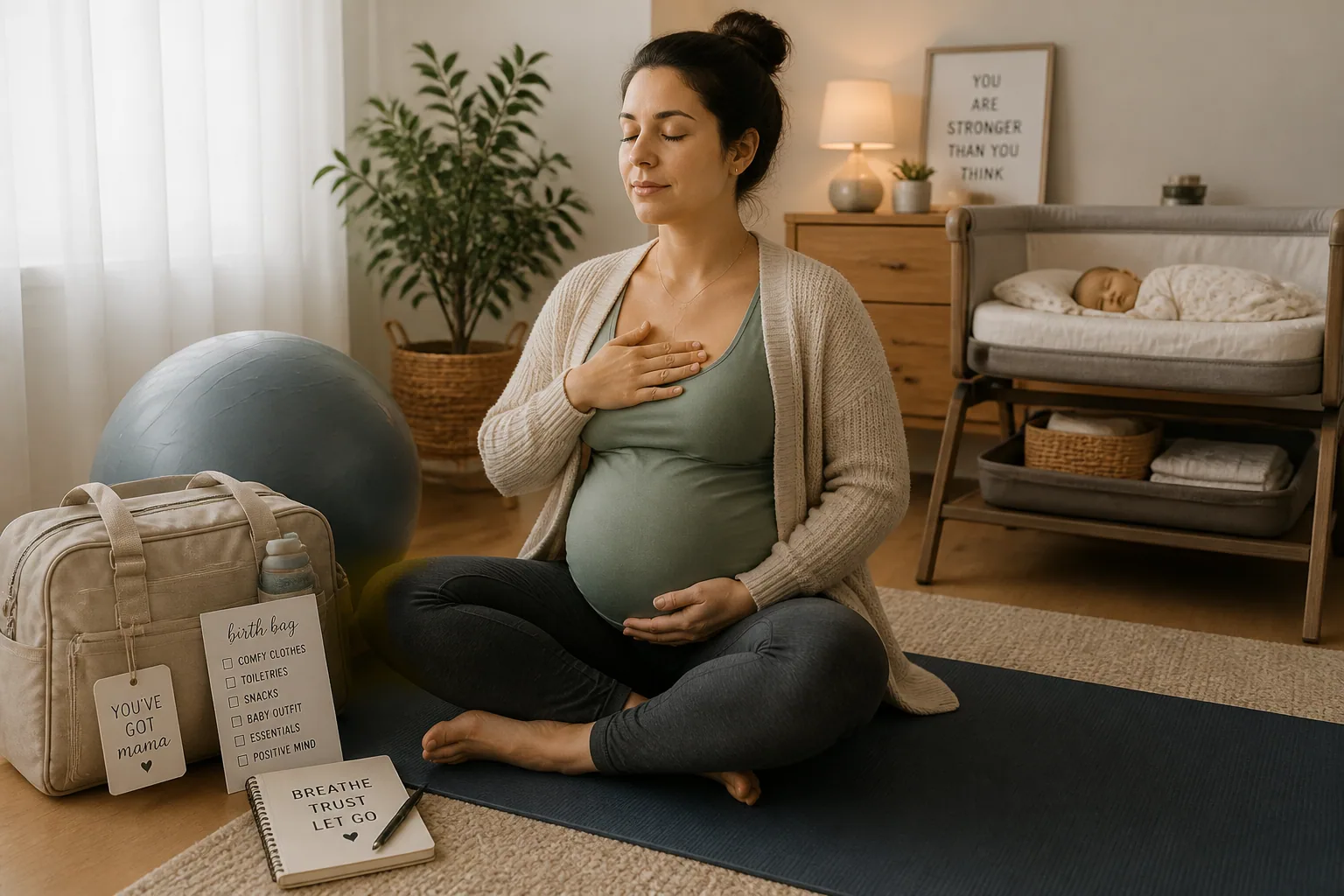
To practice it, sit or lie comfortably and place one hand on your chest and one on your belly or lower ribs. Inhale softly through the nose and allow the lower hand to rise with the breath. Exhale slowly and feel the body soften. The goal is not to force a large breath, but to make the breath smooth, easy, and unhurried.
During pregnancy, this can help create more body awareness, especially when the ribs feel restricted or the abdomen feels tense. During labor, it can be used between contractions to recover and reset. After birth, diaphragmatic breathing helps reconnect the breath to the trunk, which is useful when rebuilding core support.
A simple way to think about it is this: inhale to receive space, exhale to create ease. That gentle rhythm can be repeated anywhere, anytime, without equipment.
Pursed-Lip Breathing for Tension Release and Steady Breathing Control
Pursed-lip breathing is especially helpful when you need a longer exhale. You inhale gently through the nose, then exhale slowly through lightly pursed lips, almost as if you were blowing through a straw. This can reduce the feeling of rushing and help the body stay more regulated when sensations intensify.
In labor, pursed-lip breathing can be particularly useful during later stages or when contractions feel closer together. The 2023 review noted that in the late stage of labor, slow inhales, slow exhales, a pause, and then pursed-lip breathing were beneficial. Source: https://pmc.ncbi.nlm.nih.gov/articles/PMC9822559/
The reason this works is simple. A longer exhale tends to support parasympathetic activity, which can help reduce tension. It also gives you a clear pacing tool when it feels hard to stay steady on your own. For some people, it becomes a kind of anchor breath during the most intense moments of labor.
Postpartum, pursed-lip breathing can be used to downshift after stress, especially if the day has been physically demanding. It is a good option when you feel overstimulated, tight in the chest, or caught in shallow breathing.
Lamaze-Style Breathing and Other Techniques for Contractions and Active Labor
Lamaze-style breathing is often thought of as a toolkit rather than a single fixed pattern. The main idea is to match the breath to the intensity of the contraction and to avoid panic or unnecessary breath-holding. That may mean slow breathing early in labor, then a more focused rhythm when contractions become stronger.
The evidence is encouraging. In the randomized controlled trial of primigravid women, Lamaze-based antepartum breathing exercises were linked with more spontaneous labor onset, fewer inductions, shorter total labor, and lower cesarean rates. Source: https://pmc.ncbi.nlm.nih.gov/articles/PMC10359740/
During active labor, some people like a “one breath in, one breath out” focus. Others prefer counting, such as inhaling for four and exhaling for six. Some do better with breath plus sound, like a soft hum or open-mouthed exhale. The best pattern is the one that helps you stay present and does not create strain.
When contractions become intense, keep the breath manageable. If you notice breath holding, jaw clenching, or shoulders rising, return to a simpler pattern. The goal is not perfect technique. It is steady support.
Using Breathwork to Support Delivery and Pushing
Breathing during the pushing stage is different from breathing during early labor. In the second stage, the breath often needs to support focused effort and good body awareness. The 2023 review found that breathing associated with pushing during this stage may reduce pain, anxiety, labor duration, and perineal trauma without adverse effects on newborns. Source: https://pmc.ncbi.nlm.nih.gov/articles/PMC9822559/
In practice, this may mean exhaling with effort during a contraction rather than holding the breath for too long. For some birthing people, an open-glottis or gentle exhale-based push feels more natural and less strained. For others, a coached push may be appropriate depending on the care setting and medical guidance.
Breath is also useful for body positioning. When you can exhale and soften unnecessary tension, it may become easier to feel the pelvic floor respond and the pelvis open more efficiently. That does not mean breathing alone determines the outcome, but it can make your efforts more coordinated.
As always, follow the direction of your midwife, OB-GYN, or labor nurse, especially if labor is medically managed or if you have a specific birth plan that needs modification.
Breath, Core Strength, and Pelvic Floor Health Before and After Birth
The relationship between breath, core stability, and pelvic floor function is often described as a pressure system. In expert-reviewed postpartum recovery guidance, the diaphragm acts like the roof, the deep abdominals and back form the walls, and the pelvic floor forms the base. Inhale to release and lengthen, exhale to gently lift and support. Source: https://pelvi.health/blog/postpartum-pelvic-floor-exercises/
This coordination matters because pregnancy and birth change how pressure is managed inside the trunk. If you constantly brace, hold your breath, or bear down without control, it can increase strain. Breathwork helps retrain timing, so effort feels more connected and less forceful.
That said, research suggests breathwork alone is usually not enough to restore pelvic floor strength after birth. A 2023 review found that pelvic floor muscle training was more effective than breathing exercises alone for improving strength and symptoms such as urinary incontinence or prolapse. Source: https://pubmed.ncbi.nlm.nih.gov/37260116/
The practical takeaway is that breath is best used alongside targeted rehabilitation. It can prepare the body for movement, reduce guarding, and improve awareness, but it works best when paired with appropriate pelvic floor and core exercises guided by a qualified professional when needed.
For postpartum abdominal healing, breathing can be especially valuable. The 2025 postpartum study on diastasis recti showed that combining core stability with respiratory techniques significantly reduced inter-recti distance compared with standard care. Source: https://pmc.ncbi.nlm.nih.gov/articles/PMC11889499/
How Breathwork Can Help with Postpartum Stress, Anxiety, and Nervous System Regulation
The postpartum period can be emotionally beautiful and physically demanding at the same time. Sleep fragmentation, hormonal changes, healing tissue, feeding challenges, and shifting identity can all affect mood and stress levels. Breathwork offers a fast, low-effort way to pause and re-center.
Slow breathing can help interrupt the stress spiral before it escalates. Even a few minutes of focused breath can create a sense of containment when the day feels chaotic. This is one reason many people find short practices more realistic than trying to meditate for long periods while caring for a newborn.
Techniques like cardiac coherence, box breathing, and relaxation breathing can be especially useful here because they provide structure. For instance, a simple four-in, four-out or slightly longer exhale pattern can be done while sitting, feeding, or resting. If you need a guided rhythm, an app like Just Breathe: Relax Daily can make it easier to stay consistent with gentle reminders and visual pacing: https://findthe.app/just-breathe-ujhm1e
The important thing is to treat breathwork as support, not pressure. In postpartum life, the “right” practice is often the one you can actually do for two minutes without more stress.
Safety Tips, Contraindications, and When to Check with Your Care Team
Gentle breathing practices are generally considered safe during pregnancy, labor, delivery, and postpartum. But not all breathwork styles are appropriate. High-ventilation approaches, intense breath holds, hyperventilation, and conscious connected breathwork are commonly discouraged, especially in the first trimester and for people with cardiovascular, respiratory, or psychiatric conditions. Source: https://www.makesomebreathingspace.com/blog/is-breathwork-safe
As a rule, if a breathing practice makes you dizzy, numb, panicky, short of breath, or faint, stop immediately and return to normal breathing. Breathwork should feel supportive, not destabilizing. In pregnancy, extra caution is wise if you have placenta issues, preeclampsia, asthma, heart disease, bleeding, a history of preterm labor, or any condition your clinician is monitoring closely.
If you are postpartum and experiencing chest pain, severe shortness of breath, heavy bleeding, fever, or significant mood changes, seek medical care. Breathwork can be a helpful complement, but it should never delay evaluation when symptoms suggest something more serious.
When in doubt, keep the practice simple. Slow nasal breathing, longer exhales, and relaxed awareness are usually the safest starting point.
Creating a Simple Daily Breathwork Routine for Pregnancy and Postpartum
A good breathwork routine does not need to be complicated. In fact, consistency matters more than intensity. A few minutes a day can be enough to build familiarity so the pattern feels natural when you need it most.
One simple routine for pregnancy might look like this: one minute of settling breaths, two minutes of diaphragmatic breathing, and one minute of longer exhales. You could do it in the morning, before bed, or whenever tension builds. If you want more structure, pair it with the same playlist, room, or sitting position each time so your body begins to recognize the cue.
For postpartum recovery, you might begin with a gentle check-in breath before feeding or during a rest break. Inhale to expand the ribs and soften the belly. Exhale to gently reconnect the deep abdominals and pelvic floor. Over time, you can add light movement, such as marching in place, reaching, or pelvic tilts, while maintaining breath coordination.
If you like apps or visual guidance, a tool with calming animations and reminder features can make this much easier to sustain. The goal is not perfection. It is creating a small, reliable habit that helps you return to yourself.
Final Takeaways: Building a Breath-Based Birth and Recovery Toolkit
Breathwork can be a practical, evidence-informed companion through pregnancy, labor, delivery, and postpartum recovery. It may help reduce pain and anxiety in labor, support pushing, improve body awareness, and create a calmer recovery environment. Research also suggests that breath is most effective when used as part of a broader strategy that includes movement, pelvic floor rehabilitation, rest, and individualized medical care.
If you remember only a few things, make them these: keep the breath gentle, match the technique to the stage you are in, and avoid practices that create strain or dizziness. Diaphragmatic breathing, pursed-lip breathing, and Lamaze-style rhythms all have a place, but the safest and most effective practice is the one that feels steady and sustainable for your body.
In the end, breathwork is less about doing it perfectly and more about building trust. A few calm, intentional breaths can help you meet labor and recovery with a little more clarity, a little more softness, and a little more confidence.