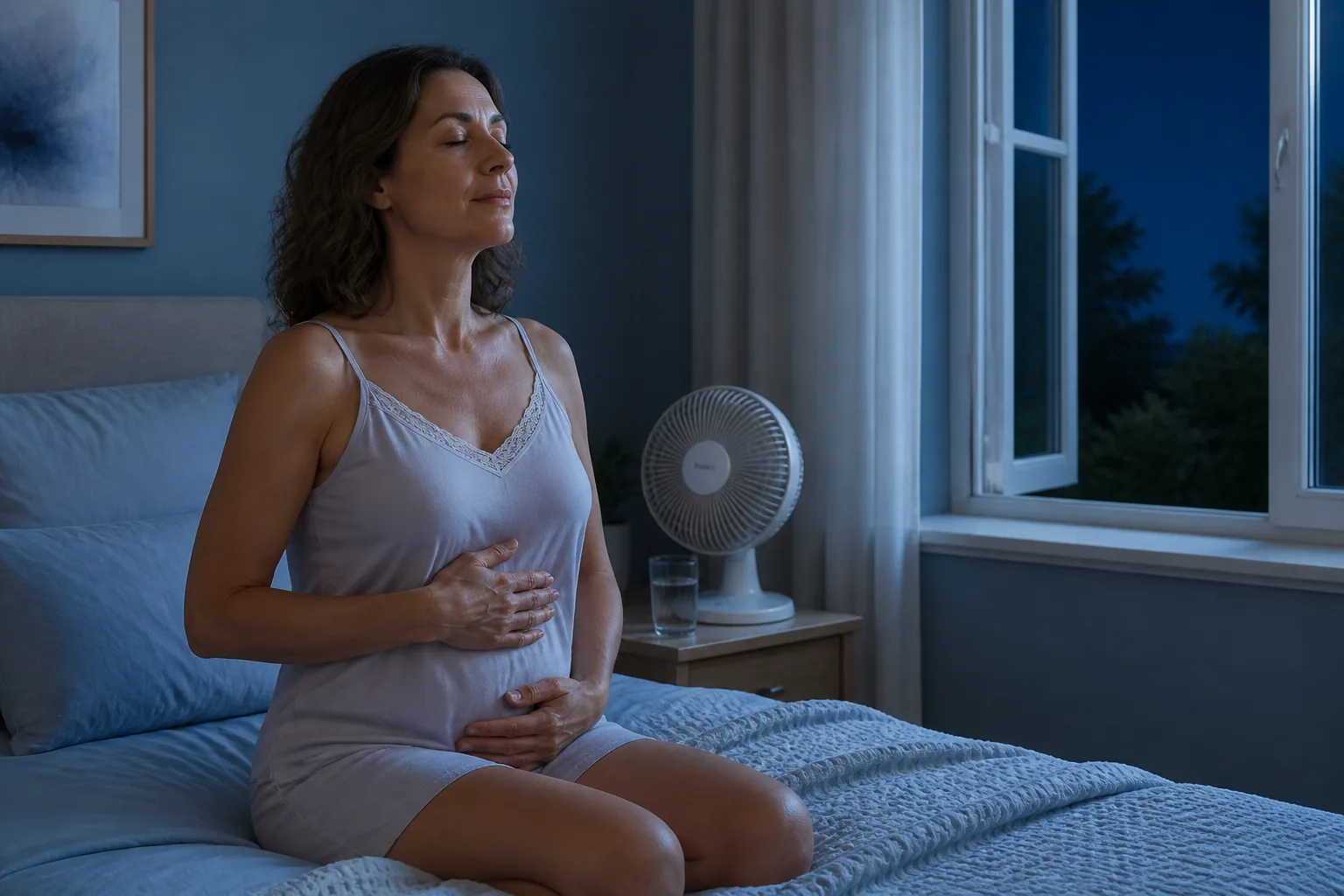
Cooling Breathwork for Menopause: Simple Techniques to Calm Hot Flashes and Night Sweats
If you are moving through perimenopause or menopause and feel like your body has suddenly forgotten how to stay comfortable, you are not imagining it. Hot flashes and night sweats, also called vasomotor symptoms or VMS, affect about 60 to 80 percent of women during the menopausal transition, and for many people they can linger for years rather than months. Research suggests the median duration is around 7 years, and in some cases symptoms continue 10 years or longer after menopause. That is a long time to keep searching for relief, especially when sleep, mood, and daily comfort are all being disrupted.
The good news is that there are gentle tools you can try right away, and breathwork is one of the simplest. Slow, steady breathing does not promise a miracle cure, but it may help calm the nervous system, ease the stress response around a hot flash, and support a little more control over your body’s reaction. In this guide, we will look at why hot flashes happen, what the research says about paced respiration, and how to use practical breathing patterns like diaphragmatic breathing, box breathing, coherent breathing, and cooling breaths such as Sheetali or Sitali. We will also cover when to practice, how to build a habit, and how to use breathwork as part of a realistic menopause symptom plan.
Why Hot Flashes and Night Sweats Happen in Menopause
Hot flashes and night sweats are not just random overheating episodes. They are tied to the hormone changes of menopause, especially falling estradiol and rising follicle-stimulating hormone. These shifts seem to affect the brain’s temperature regulation center, narrowing the body’s thermoneutral zone. In simple terms, your internal thermostat becomes more sensitive, so small changes in temperature, stress, or even a full room can trigger a sudden wave of heat and sweating. Studies also point to changes in autonomic nervous system balance, with more sympathetic activity and less parasympathetic activity. That means the body may spend more time in a revved-up state, which can make VMS feel stronger or more frequent.
This is also why symptoms can feel worse during stressful periods. The menopausal transition is already a time of change, and factors such as stress, smoking, obesity, and emotional mood disturbance are associated with more frequent or severe VMS. Breathwork does not replace medical treatment, but it can be a useful way to soften the nervous system load that often rides along with hot flashes and night sweats.
How Slow Breathing Helps Calm the Nervous System
Slow breathing works because breathing is one of the few automatic body functions you can also influence on purpose. When you breathe more slowly and evenly, especially using the diaphragm, you may help activate the parasympathetic nervous system, the part responsible for rest, recovery, and digestion. That can lower the sense of alarm in the body and may reduce the stress amplification that makes a hot flash feel more intense.
The sweet spot that comes up often in research and in practical breathwork is paced breathing at about 6 to 8 breaths per minute. That is slower than most people normally breathe, and it tends to encourage longer, smoother exhalations and more rhythmic regulation. Many people find that this pace feels grounding, especially if they practice it before symptoms spike rather than waiting until they are already overwhelmed.
The key idea is not to force deep breathing. In fact, over-breathing can make some people feel lightheaded. The goal is calm, comfortable, and steady, with the breath moving like a gentle wave rather than a gulp.
What the Research Says About Paced Respiration
The research on breathing for hot flashes is encouraging, but it is also mixed, which is important to say clearly. In the MaTURE randomized trial, perimenopausal and postmenopausal women practiced device-guided slow-paced respiration at less than 10 breaths per minute for 15 minutes daily. After 12 weeks, hot flash frequency dropped by 21 percent, while the music-listening control group improved by 35 percent. Paced respiration also reduced moderate-to-severe hot flashes by about 19 percent. That suggests breathing may help, but it may not be stronger than all comparison strategies in every setting.
Another study found that paced breathing at 6 breaths per minute for 15 minutes once or twice daily reduced hot flash frequency by about 42 percent with one session per day and about 52 percent with two sessions per day, compared with about 46 percent in the usual breathing control group. That looks promising on the surface, though the difference versus control was not dramatic enough to prove a clear standalone advantage for everyone.
Larger, more rigorous trials have found that paced respiration did not significantly outperform usual care, fast shallow breathing, or other controls for hot flash frequency, severity, bother, or interference. That is why it is best to think of breathwork as a supportive tool rather than a guaranteed fix. It may help some women modestly, especially with the sense of urgency, distress, sleep disruption, and overall coping that often come with VMS.
There is also broader relaxation research showing that paced respiration and guided imagery can reduce hot flash frequency or severity in smaller studies, though sometimes the biggest benefit is in how bothersome symptoms feel rather than in the raw number of flashes. In other words, breathwork may not erase menopause symptoms, but it may make them easier to live with.
Technique 1: Diaphragmatic Breathing at 6 to 8 Breaths Per Minute
Diaphragmatic breathing is the foundation of many calming practices. Instead of breathing high in the chest, you let the belly expand gently on the inhale and soften on the exhale. This can encourage slower, fuller breathing and reduce tension in the neck, shoulders, and upper chest.
Here is a simple way to try it. Sit upright or lie down comfortably. Place one hand on your chest and one hand on your belly. Inhale through your nose for a count of 4 or 5, letting the belly rise first. Exhale through the nose or mouth for a count of 5 or 6, letting the belly fall. Keep the breath smooth and unforced. Aim for about 6 to 8 breaths per minute, which usually means a longer exhale than inhale.
Try this for 5 to 10 minutes to start. If that feels easy, you can work up to 15 minutes once or twice daily. The sensation should be calming, not strenuous. If you feel dizzy, shorten the inhale and exhale, or return to your normal breathing and try again later.
Technique 2: Equal Breathing and Box Breathing
Equal breathing means making the inhale and exhale the same length. This is useful when you want a simple, steady rhythm without having to think too hard about the breath. A common pattern is inhale for 4, exhale for 4. If that feels comfortable, you can gradually lengthen to 5 and 5 or 6 and 6.
Box breathing uses four equal parts: inhale, hold, exhale, hold. A classic pattern is 4-4-4-4. It is a little more structured than equal breathing and can be especially helpful when anxiety is rising or you need to interrupt spiraling thoughts. For some women, the pause after the exhale can feel soothing and centering, but if breath retention feels uncomfortable during a hot flash, skip the holds and use equal breathing instead.
These techniques are simple, portable, and easy to use in public, at work, or in bed. Because they are repetitive, they also make it easier to stay focused on something neutral rather than on the heat itself.
Technique 3: Coherent Breathing for Daily Regulation
Coherent breathing, sometimes called cardiac coherence, usually means breathing at about 5 to 6 breaths per minute with a smooth, even rhythm. The inhale and exhale are often equal or nearly equal, such as 5 seconds in and 5 seconds out. The goal is not performance. The goal is nervous system steadiness.
This style of breathing is a strong choice for daily regulation because it is slow enough to encourage calm, but regular enough to feel natural after a little practice. If you tend to feel wired, tense, or emotionally reactive during menopause, coherent breathing can be a helpful “reset” practice even when you are not having a hot flash.
One easy routine is to practice for 10 minutes after waking, or at another predictable point in the day. You can pair the breath with a soft timer or a guided rhythm. If you want a simple tool to make that easier, an app like Just Breathe: Relax Daily can be useful for guided patterns, reminders, and session tracking, especially if you do better when the rhythm is visual and consistent.
Technique 4: Cooling Breaths Like Sheetali or Sitali
Cooling pranayama practices such as Sheetali and Sitali are often described as refreshing breaths. In these techniques, the inhale is taken through a curled tongue or pursed lips, then the exhale is released through the nose. They are traditionally used to create a sense of coolness and calm.
It is worth keeping expectations grounded. One study of cooling pranayamas in healthy young men found that these techniques increased oxygen consumption and body surface temperature during practice, and temperature dropped afterward during rest, but not conclusively more than quiet lying down. So while many people subjectively find them cooling or soothing, the evidence does not prove they literally cool the body in a dramatic way.
That said, the subjective effect can still matter. If a cooling breath helps you feel more refreshed, more focused, or less panicked during a hot flash, that is a real benefit. If you cannot comfortably curl your tongue, Sitali can be modified by inhaling through slightly pursed lips instead. Keep the practice brief and gentle.
When to Use Breathwork: Morning, During a Flash, and Before Bed
Timing can make breathwork more effective. In the morning, a 5 to 10 minute practice can set a calmer baseline for the day and may help you start with less tension in your system. If mornings are hectic, even a short coherent breathing session can help create a moment of control before symptoms or stress build up.
During a hot flash, the goal is not to make the episode disappear instantly. Instead, use your breath to reduce panic, slow the stress response, and ride the wave. Try to pause, relax the jaw, breathe in through the nose if possible, and lengthen the exhale. If you can, lower your shoulders, sip cool water, and remind yourself that the wave will pass.
Before bed, a slower breath routine can help signal to the body that it is safe to settle. This is especially useful if night sweats, wakefulness, or anxiety about not sleeping are part of the problem. A gentle box breathing or coherent breathing practice for 5 to 15 minutes can become a kind of landing strip for sleep.
How to Make Breathwork a Daily Habit
The best technique is the one you will actually do. Breathwork becomes easier when it is attached to an existing habit, like brushing your teeth, making coffee, or getting into bed. Set a realistic starting point. Five minutes a day is enough to build momentum.
Reminders are especially helpful because menopause symptoms do not always appear on a convenient schedule. A phone alarm, a calendar block, or a breathing app with gentle notifications can help you remember to practice before you feel overwhelmed. Tracking your sessions can also make the habit more rewarding, because you can see your consistency even on days when symptoms still show up.
Another useful approach is to plan for different moments. Use coherent breathing in the morning, equal breathing during a stressful afternoon, and a short cooling breath or box breathing routine before bed. That way breathwork becomes a toolkit rather than a single technique you must use perfectly.
Extra Cooling Tips for Managing Menopause Symptoms
Breathwork tends to work best as part of a broader symptom-management plan. Simple cooling habits can make a meaningful difference, especially on nights when the bedroom feels too warm or your body seems extra reactive. Dress in layers so you can remove clothing quickly. Choose breathable fabrics. Keep a fan, cold water, or a chilled cloth nearby. If night sweats are common, consider lighter bedding that is easy to adjust.
Lifestyle factors matter too. Research shows that stress, smoking, obesity, and emotional mood disturbance are associated with more severe or frequent vasomotor symptoms. That does not mean every symptom is under your control, but it does mean small supportive changes can help. Regular movement, steady sleep habits, hydration, and stress reduction all fit well alongside breathwork.
It is also important to remember that hormone therapy remains the most effective treatment for menopause symptoms when it is safe and appropriate for you. Some newer nonhormonal options are also being studied. Breathwork can live alongside those options rather than compete with them.
Safety Notes and When to Check With Your Doctor
Breathing exercises are generally safe, including for many people with asthma or other respiratory conditions, and research has found positive effects on quality of life and hyperventilation symptoms without serious harms. Even so, if you have lung disease, use pranayama or breathwork carefully and talk with a clinician if you are unsure whether a technique is appropriate for you.
You should also stop or modify a practice if it causes dizziness, chest discomfort, air hunger, coughing, or anxiety. Avoid forcing long breath holds if they make you uncomfortable. During a hot flash, gentle and comfortable always beats intense and complicated.
Check with your doctor if your symptoms are severe, happening very often, disrupting sleep badly, or affecting your daily functioning. It is also wise to ask for medical advice if you have a history of lung problems, heart disease, or other health concerns that might change how you should approach breathwork or menopause treatment.
A Realistic, Gentle Plan for Finding Relief
If you want a simple place to start, keep it basic. Try 5 minutes of diaphragmatic or coherent breathing in the morning, another 3 to 5 minutes when you feel a hot flash starting, and a calming equal-breath or box-breath routine before bed. If cooling breaths feel good, use them as a bonus, not as a requirement.
The goal is not to eliminate every hot flash by force. The goal is to lower your body’s overall stress load, make symptoms feel less overwhelming, and give yourself a few dependable tools you can turn to anywhere. The research suggests paced respiration may help modestly for some women, even if results vary. That makes it worth trying, especially when it is low-cost, low-risk, and easy to pair with other cooling strategies.
Menopause can be a long chapter, but you do not have to white-knuckle it. With a little practice, slow breathing can become one of the most accessible ways to help your system settle, support better nights, and create more moments of calm when the heat shows up unexpectedly.