Harnessing Breath in Minutes: How Micro-Breathing Techniques Can Reset Your Stress Throughout the Day
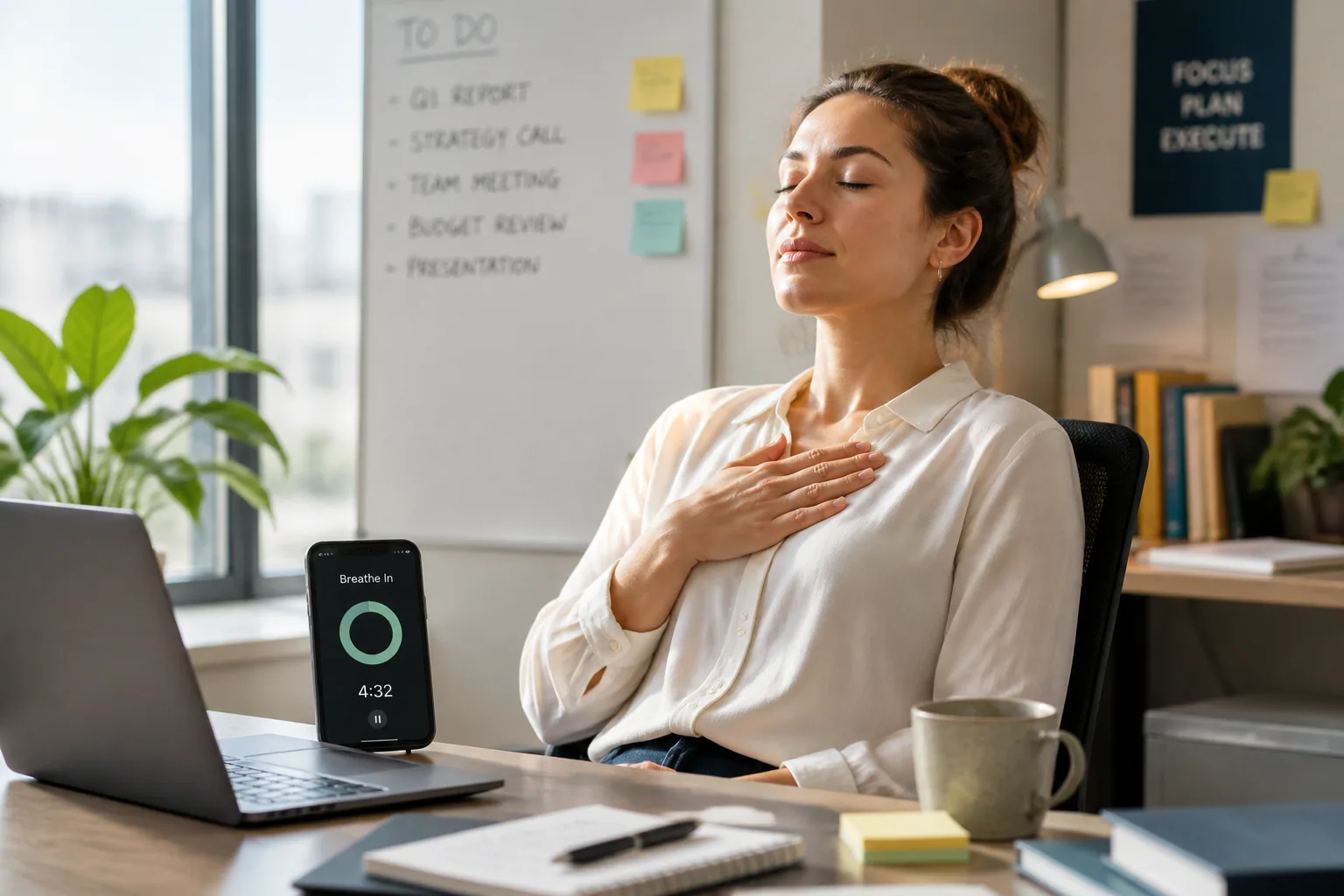
If your days feel packed from the moment you wake up, long meditation sessions and full wellness routines can feel unrealistic. That is exactly why micro-breathing matters. These are short, intentional breathing breaks lasting just one to three minutes, and they can fit between meetings, after a difficult conversation, before school pickup, or while sitting in your car. The goal is simple: use the breath to create a fast reset for your nervous system, so you can come back to the day with more calm, clarity, and energy.
The best part is that micro-breathing is not just a convenience hack. Research suggests that even brief breathwork can make a measurable difference in how stressed you feel and how your body responds. In other words, small practices can still produce meaningful effects when they are done with consistency and intention.
Why Micro-Breathing Matters in a Busy World
Most people do not need another complicated self-care routine. They need something practical. Micro-breathing fits that reality because it does not ask for special equipment, a quiet room, or a lot of time. It asks only for a few focused breaths.
That matters in a busy world because stress rarely arrives in one dramatic wave. More often, it accumulates in tiny spikes: an inbox that never empties, a delayed commute, a tense conversation, a toddler meltdown, a meeting that runs long. When stress is fragmented like that, a short breathing reset can act like a circuit breaker. It gives your body a chance to downshift before tension builds further.
This is also why micro-breathing tends to work well as a habit. People are more likely to repeat a practice that feels doable. A one-minute pause is easier to protect than a 20-minute routine, and repeated small wins can lead to real physiological and mental benefits over time.
What Science Says About 1- to 3-Minute Breathing Resets
The science behind breathwork is stronger than many people realize. A meta-analysis of more than 70 randomized controlled trials found that breathwork significantly reduces stress and anxiety, improves mood, and enhances markers such as heart rate variability, or HRV, which reflects healthier autonomic nervous system regulation. Source: https://www.nature.com/articles/s41598-022-27247-y
Even very short practices can help. A PMC article on micro-breaks found that 7 minutes of breathing or meditation significantly reduced perceived stress, anxiety, and fatigue in daily-life settings. Source: https://pmc.ncbi.nlm.nih.gov/articles/PMC10917090/
And perhaps most encouraging for busy people, an in-the-wild field study of mobile health micro-interventions found that just one-minute breathing exercises significantly reduced momentary stress levels, with results measured through ecological momentary assessments. Source: https://arxiv.org/abs/2407.11612
The takeaway is encouraging: you do not need a long session to get a useful reset. A few minutes, used well, can interrupt the stress response and help your body shift into a calmer state.
How Breath Affects the Nervous System and Stress Response
Breathing is one of the few bodily functions that happens automatically but can also be controlled voluntarily. That makes it uniquely powerful. When you breathe slowly and deliberately, you influence the autonomic nervous system, especially the balance between the sympathetic branch, which drives fight or flight, and the parasympathetic branch, which supports rest and digest.
During stress, the sympathetic system tends to dominate. Heart rate rises, muscles tense, and the body prepares for action. Helpful in danger, yes. Helpful during a workday crisis that is mostly mental? Not so much.
Micro-breathing works by nudging the body in the opposite direction. Slower, more controlled breathing can stimulate vagal activity and support parasympathetic dominance. This often shows up as lower heart rate, steadier blood pressure, less physical tension, and a sense of internal slowing down.
One useful marker here is HRV, or heart rate variability. Higher HRV is generally associated with better resilience and flexibility in stress regulation. That is why coherent breathing and other paced breathing techniques are often used not just for relaxation, but for improving how the body responds to future stressors.
Quick Micro-Breathing Techniques You Can Do Anywhere
The beauty of micro-breathing is that the techniques are simple. You do not need to memorize a complicated sequence. What matters most is choosing a pattern that matches your goal, whether that is calming down, resetting your focus, or gently increasing alertness.
5:5 Breathing for Calm and Steady Focus
One of the most reliable patterns is 5:5 breathing, also known as coherent breathing. You inhale for 5 seconds and exhale for 5 seconds, creating a steady rhythm of about 6 breaths per minute. This pattern is known to maximize HRV, improve baroreflex sensitivity, and support a more balanced autonomic state. Source: https://breathmax.app/patterns/coherent-5-5
This is a great choice when you feel scattered, overstimulated, or anxious but still need to keep working. It is calm without being sedating, which makes it especially useful before a presentation, after a stressful email, or during a transition between tasks.
Try it like this: breathe in for 5, breathe out for 5, and repeat for one to three minutes. Keep the breath soft and unforced. If counting feels distracting, use a visual guide or gentle timer instead.
Left-Nostril Breathing for Slowing Down and Resetting
Left-nostril breathing is a classic choice when you want to signal rest and digest. Studies comparing unilateral nostril breathing suggest that breathing through the left nostril only can produce parasympathetic effects, including lowered heart rate and blood pressure, while right-nostril breathing tends to increase arousal. Sources: https://pubmed.ncbi.nlm.nih.gov/36325230/ and https://pmc.ncbi.nlm.nih.gov/articles/PMC4097918/
This makes left-nostril breathing a useful option when you feel keyed up, irritated, or mentally overclocked. It can be especially helpful after a stressful call or before bed if your mind is still racing from the day.
To practice, gently close your right nostril and breathe only through the left for one to three minutes. Keep the pace relaxed. If this feels awkward at first, do not force it. Even the act of slowing down and focusing on the breath can be beneficial.
Gentle Energizing Breaths for Afternoon Slumps
Not every micro-breathing session needs to be calming. Sometimes the goal is to gently increase alertness when your energy dips in the afternoon. In that case, a more energizing pattern can help you shift out of fog without reaching for another coffee immediately.
Traditional yoga breathing studies have found that conscious breath regulation and focused attention can increase oxygen consumption compared with quiet rest, even during relatively short sessions. Source: https://pmc.ncbi.nlm.nih.gov/articles/PMC11185434/
That does not mean breathwork is a substitute for sleep or nutrition, but it does suggest that intentional breathing can help wake up the system in a healthier way than scrolling or sugary snacks. A few more active breaths, used briefly, can create a helpful reset when concentration starts to fade.
If you use energizing breathing, keep it gentle. The point is not to hyperventilate or create strain. The point is to bring in a little more alertness and clarity so you can finish the next task with more presence.
When to Use Micro-Breathing Throughout the Day
The best breathing habit is the one you actually remember to use. For many people, the easiest way to build consistency is to attach micro-breathing to transitions that already happen every day.
Good moments include: before opening your laptop, after sending an important email, while waiting for a meeting to start, in the car before entering the house, after lunch, before a tough conversation, and right before bed. These are natural pause points where a one-minute reset feels less like another task and more like a helpful bridge.
You can also match the technique to the moment. Use 5:5 breathing when you need focus, left-nostril breathing when you want to settle down, and an energizing pattern when you feel mentally flat. That flexibility is part of what makes micro-breathing so practical.
How to Build a Consistent Breath Break Habit
Consistency is where the real value shows up. A single breathing exercise can feel nice, but repeated use is what turns the practice into a reliable stress-management tool. The good news is that habit-building does not need to be complicated.
Start small. Pick one predictable time each day and make it your anchor. For example, do one minute of breathwork after your first cup of coffee, before your lunch break, or when you shut your laptop at the end of the workday. Keep the goal realistic enough that you can repeat it even on busy days.
It also helps to remove friction. Decide in advance which pattern you will use and how long you will practice. The less you have to think, the easier it is to begin. Over time, the practice can become a reflex instead of an extra decision.
Using Reminders, Apps, Ambient Sounds, and Visual Guides
Many people want to breathe more intentionally, but they forget. That is where support tools can make a big difference. Simple reminders can turn an occasional practice into a dependable one.
A breathing app can be especially useful because it combines timing, guidance, and accountability in one place. One option is Just Breathe: Relax Daily, which offers guided breathing patterns, visual animations, ambient sounds, and smart reminders to help you build a consistent routine. You can learn more here: https://findthe.app/just-breathe-ujhm1e
Visual breathing guides are particularly helpful if counting distracts you. Ambient sounds such as ocean waves, rain, or forest noise can also make the practice feel more inviting, especially if you are trying to create a mini-reset at your desk or during a short break at home.
The point of using tools is not to make breathwork dependent on technology. It is to make the practice easier to start until it becomes familiar enough to do on your own.
Common Mistakes to Avoid With Short Breathwork Sessions
Micro-breathing is simple, but there are a few common mistakes that can make it less effective. One is trying too hard. Breathwork should feel steady and controlled, not strained. If you become lightheaded or uncomfortable, slow down and return to a natural rhythm.
Another mistake is treating it like a performance. The goal is not perfect technique. The goal is to create a brief, repeatable interruption in stress. Even if your mind wanders, the practice can still help.
A third mistake is waiting until you are completely overwhelmed. Micro-breathing works best as a preventive reset as well as a response tool. Use it before stress peaks when possible, not only after you are already flooded.
Finally, do not expect one session to solve everything. Breathwork is most effective when it is part of a wider rhythm of recovery, including movement, sleep, hydration, and realistic boundaries. Think of it as a daily nervous system tune-up, not a miracle fix.
Creating Your Personal 3-Minute Stress Reset Routine
If you want a simple routine, keep it very basic. Start with 30 seconds of settling in, then choose one breathing pattern for 1 to 2 minutes, and finish with a short moment of noticing how you feel. That is enough to create a meaningful pause without disrupting your day.
A sample 3-minute reset could look like this: sit upright, relax your shoulders, and do 5:5 breathing for two minutes. If you feel anxious, make the exhale slightly softer and longer. If you feel tired, choose a gentle energizing pattern instead. If you want deeper calm, end with a minute of left-nostril breathing.
What matters most is matching the technique to your current state. Over time, you will start to notice which pattern helps you focus, which one settles your body, and which one gives you a subtle energy lift. That awareness alone can make you feel more in control of your stress response.
Micro-breathing is powerful because it meets real life where it happens. You do not need a perfect schedule or a long meditation cushion to benefit. You just need a few minutes, a little consistency, and the willingness to pause.