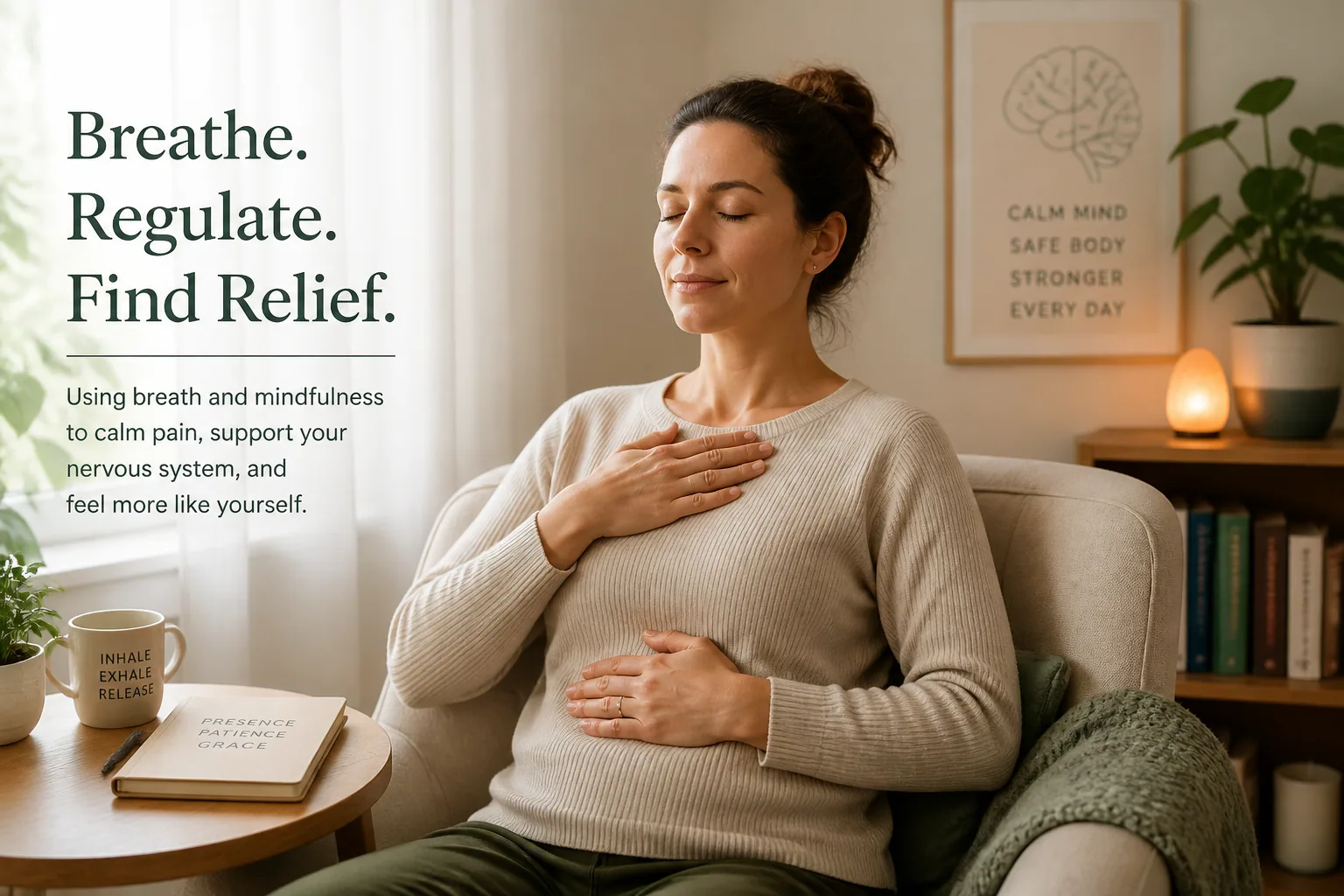
How Breathwork Can Help Manage Chronic Pain: What the Research Says and How to Start
Living with chronic pain can feel exhausting because it is rarely just about pain alone. It can affect sleep, mood, mobility, stress levels, and confidence in your own body. That is one reason breathwork is getting so much attention in pain care. Breathing practices are simple, low-cost, and accessible, and early research suggests they may help calm the nervous system, reduce stress arousal, and ease the way pain is experienced. They are not a cure, and they do not replace medical treatment, but they may be a useful support tool when used consistently and realistically.
This article takes a practical look at what the research says about breathing exercises for chronic pain, including slow-deep breathing, diaphragmatic breathing, breathing awareness, and respiratory resistive breathing. We will also look at how breathwork may affect pain signaling, what results to expect, how often to practice, and how to build a beginner-friendly routine that fits daily life.
Why Breathwork Is Gaining Attention in Chronic Pain Care
Breathwork is appealing in chronic pain care because it is something people can do almost anywhere, often without equipment, and it can be adapted to different comfort levels. For many people, pain and stress feed into each other. When pain rises, stress rises. When stress rises, muscles tense, breathing becomes shallow, and pain can feel even more intense. Breathwork aims to interrupt that loop by creating a calmer internal state.
There is also growing interest in breathwork because it is gentle. Some people with pain cannot tolerate higher-intensity exercise during flare-ups, but they may still be able to sit or lie down and practice slow breathing. That makes it a practical complement to movement therapy, mindfulness, and professional pain management. Research is increasingly showing that breathing exercises may support both symptoms and function, especially when practiced regularly.
What Recent Research Says About Breathwork and Pain Relief
The research is promising, though still developing. A meta-analysis of 13 randomized controlled trials involving 677 people with chronic low back pain found that breathing exercises significantly reduced pain and disability. Pain improvement was substantial, with a standardized mean difference of −0.84, and disability also improved, with a standardized mean difference of −0.74. The same analysis also found improvements in lung capacity and breathing-related measures such as Forced Vital Capacity and FEV1/FVC ratio. Source: https://pubmed.ncbi.nlm.nih.gov/37718775/
Other studies point in a similar direction. In a study of 50 people with chronic pain, breathing with a longer exhalation than inhalation at 12 breaths per minute increased vagally mediated heart rate variability and improved mood, increasing positive mood while reducing arousal. That matters because pain is strongly influenced by nervous system state, not just tissue damage. Source: https://pubmed.ncbi.nlm.nih.gov/39180643/
A 6-week diaphragmatic breathing program, combining supervised sessions and daily home practice, reduced pain and perceived stress while improving mobility in adults with nonspecific chronic low back pain. In another study, people with metastatic gastrointestinal cancers who practiced deep diaphragmatic breathing for 10 minutes twice daily over 10 days reported lower acute and chronic pain scores than controls. In fibromyalgia, a non-supervised breathing regimen was also linked with improved pain and daily functioning, with no major safety concerns reported. Sources: https://jpmhr.com/index.php/jpmhr/article/view/4 https://pmc.ncbi.nlm.nih.gov/articles/PMC11609224/ https://pubmed.ncbi.nlm.nih.gov/31003653/
There is even evidence that guided breathing plus mindfulness can help. A proof-of-concept study of Guided Respiration Mindfulness Therapy reported clinically meaningful improvements in pain intensity and pain interference at two- and six-week follow-ups, and participants found the intervention highly acceptable. Source: https://journals.sagepub.com/doi/10.1177/27683605251406218
How Breathing Affects the Nervous System and Pain Signals
Breathing is one of the rare body functions that is both automatic and voluntary. That means it sits right at the intersection of conscious control and autonomic regulation. When you slow your breathing and lengthen your exhale, you may shift the body toward parasympathetic activity, which is the branch often associated with rest, recovery, and lower arousal.
This matters for pain because chronic pain is not only a sensory experience. It is also shaped by the autonomic nervous system, attention, stress hormones, sleep quality, muscle tension, and emotional state. A calmer breathing pattern can sometimes reduce the sense of threat the body is experiencing. That may not remove the underlying condition, but it can reduce amplification of pain signals and make pain feel more manageable.
One useful marker here is heart rate variability, or HRV. In the chronic pain study mentioned above, breathing with a longer exhalation increased HF-HRV and RMSSD, both of which are commonly associated with stronger vagal influence. In plain language, the breathing pattern appeared to support better autonomic flexibility. That is one reason slow, controlled breathing is often discussed as a way to support resilience rather than as a direct painkiller.
Slow-Deep Breathing vs Diaphragmatic Breathing vs Breathing Awareness
These terms are often used interchangeably, but they are not exactly the same. Slow-deep breathing usually refers to deliberately slowing the breath rate, often into a range of about 2 to 10 breaths per minute depending on the protocol. Diaphragmatic breathing emphasizes using the diaphragm more fully so the abdomen and lower ribs expand gently on the inhale. Breathing awareness is less about changing the breath and more about noticing it with attention and curiosity.
Slow-deep breathing tends to be the most studied for autonomic effects because it can influence heart rate, CO2 tolerance, and vagal activity. Diaphragmatic breathing is often used to reduce accessory muscle tension and encourage a more relaxed breathing pattern. Breathing awareness can be especially helpful for people who feel overwhelmed by changing their breath too quickly, since it begins with observation before modification.
A recent systematic review of 48 randomized controlled trials found consistent benefits of diaphragmatic breathing for several health conditions, while also noting that protocols varied widely. Session lengths ranged from 3 to 45 minutes and breathing frequencies ranged from 2 to 10 breaths per minute over periods from one session to 12 weeks. That tells us two things. First, there is no single perfect recipe. Second, consistency and fit may matter more than chasing one ideal number. Source: https://www.sciencedirect.com/science/article/pii/S0965229925001931
What Is Respiratory Resistive Breathing and How Is It Different?
Respiratory resistive breathing is different from slow breathing alone because it adds resistance to inhalation or exhalation, usually through a device or controlled method. Instead of simply reducing pace, it makes the breathing muscles work a little harder. That can train respiratory muscles and may change how the body perceives effort and control.
This type of breathing is not usually the first choice for someone starting with chronic pain unless guided by a professional. It may be more relevant in specific rehabilitation or respiratory training contexts. Compared with gentler forms like diaphragmatic breathing, resistive breathing is more structured and may feel more demanding. For many people with pain, especially during a flare, the gentler option is a better place to begin.
Can Breathwork Help Back Pain, Joint Pain, and Fibromyalgia?
For back pain, the evidence is strongest so far. The meta-analysis of randomized trials in chronic low back pain found meaningful improvements in both pain and disability, which is encouraging because back pain often affects daily movement and function as much as pain intensity itself. That suggests breathwork may support not only symptom relief but also the ability to do more of what matters in daily life.
For joint pain, the research is less specific, but the same logic may apply. If breathwork helps lower stress arousal, reduce muscle guarding, and improve body awareness, it may make movement feel less threatening. That can be especially useful when pain makes the whole body feel braced and cautious.
Fibromyalgia is another condition where breathwork looks promising. In the exploratory study in women with fibromyalgia, breathing exercises improved pain levels and the overall impact of fibromyalgia on daily life. Because fibromyalgia often involves widespread pain, fatigue, sleep issues, and heightened sensitivity, practices that help regulate the nervous system may be particularly relevant. Still, the evidence is early, so breathwork should be seen as a support, not a stand-alone solution.
What Results to Expect and What Breathwork Cannot Do
It is best to expect gradual support rather than dramatic immediate relief. Some people notice calmness, softer muscle tension, or a lower pain baseline after a single session. Others need days or weeks of practice before they notice any meaningful difference. Research suggests the strongest benefits often come from repeated practice, not from one-off sessions.
Breathwork can help with pain perception, stress, mood, and sometimes mobility. It may also improve sleep readiness or make flare-ups feel less overwhelming. But it cannot fix structural causes of pain on its own, and it does not replace diagnosis, medication when needed, physical therapy, or other medical care. If pain is worsening, changing, or associated with new symptoms, breathwork should not delay evaluation.
It is also important not to overpromise. Breathwork will not work equally well for everyone. Some people love it immediately. Others find it difficult at first, especially if they notice their breath a lot or if certain patterns make them feel dizzy or anxious. That does not mean it is failing. It may simply mean the pattern needs adjusting.
How Often to Practice: Duration, Frequency, and Best Times of Day
There is no universal prescription, but the research gives useful clues. Many studies use sessions from 10 to 20 minutes, once or twice daily, over several weeks. The diaphragmatic breathing systematic review also shows that effective protocols can vary widely, from very short sessions to longer practices. For chronic pain support, consistency is usually more important than duration alone.
A practical starting point is 5 to 10 minutes, once or twice per day, and then gradually increase if it feels helpful. Some people prefer practicing in the morning to set a calmer baseline. Others do better in the evening to help transition into sleep. A useful approach is to experiment and observe whether breathing feels more helpful before activity, after activity, or during a scheduled pause in the day.
If you are using breathwork to support pain flare management, short, repeated sessions may work better than trying to push through one long session. The goal is to signal safety to the body, not to strain it.
Simple Breathwork Patterns to Try for Chronic Pain Support
One of the simplest options is longer-exhale breathing. Inhale gently through the nose, then exhale a little longer than the inhale. You do not need to force a ratio. Even a modestly longer exhale can be enough to change the tone of the practice. This is a good option when you want calm without overcomplicating the technique.
Diaphragmatic breathing is another strong starting point. Let the belly and lower ribs expand on the inhale and soften on the exhale. Keep the shoulders relaxed. If you notice your chest or neck doing most of the work, reduce the size of the breath. Bigger is not always better, especially for pain.
Breathing awareness can be useful when you are not ready to control the breath. Simply notice where the breath moves, whether it feels tight or easy, and whether it changes with pain, posture, or emotion. This can build body awareness and reduce fear around breath sensations.
If you like structure, simple guided patterns such as box breathing or cardiac coherence can also be helpful, especially when the goal is emotional regulation. A tool like Just Breathe: Relax Daily can make that easier by offering guided breathing patterns, calming animations, reminders, and progress tracking: https://findthe.app/just-breathe-ujhm1e
How to Use Breathwork During Flare-Ups Without Overdoing It
During a flare-up, less is often more. If pain is high, avoid making the breath too big, too fast, or too intense. Instead, use a soft, shortened version of your practice. You might sit or lie down, relax the jaw, and simply lengthen the exhale slightly for a few breaths at a time.
If breath focus increases distress, switch to external anchors. For example, notice the sound of the room, the feeling of support under your body, or a hand resting on the abdomen. Then return to breathing only when it feels manageable. Breathwork should create more safety, not more effort.
In flare-ups, the goal is not to eliminate pain immediately. It is to lower the nervous system load a little, so the flare does not escalate further. Small doses can still be meaningful.
When Breathing Exercises Feel Uncomfortable: Common Problems and Fixes
Some people feel dizzy when they start breathing exercises. That often happens when the breath becomes too large or too fast. The fix is usually to reduce intensity, slow down, and breathe more normally. There is no prize for deepening the breath if it makes you lightheaded.
Others feel anxious when they pay attention to their breathing. That can happen if breath sensations are linked to panic, trauma, or a history of shortness of breath. In that case, it may help to begin with brief awareness practices, shorter sessions, or guided support from a clinician who understands trauma-informed care.
Sometimes pain increases because the person is sitting rigidly or trying too hard to breathe “correctly.” Breathwork should feel guided but not forced. A gentle rhythm, relaxed posture, and smaller range of motion are often more helpful than precision.
How to Combine Breathwork With Movement, Mindfulness, and Therapy
Breathwork tends to work best as part of a broader pain management plan. It can pair well with gentle movement, pacing, mindfulness, cognitive behavioral strategies, physical therapy, and sleep support. For many people, breathing becomes a bridge into movement because it helps reduce guarding and increase confidence.
For example, a few minutes of diaphragmatic breathing before stretching may make motion feel safer. A short breathing practice after a walk may help the nervous system settle. Mindfulness can add an element of noticing pain without panic, while therapy can help address the fear, frustration, and behavior changes that often come with chronic pain.
The key is integration. Breathwork is not meant to isolate pain from the rest of care. It is meant to support the whole person.
Who Should Talk to a Medical Professional Before Starting
Most people can try gentle breathwork safely, but some should check with a medical professional first. That includes people with unexplained shortness of breath, active heart or lung disease, recent surgery, severe dizziness, fainting episodes, panic that is easily triggered by breath focus, or any condition where changes in breathing could be risky.
It is also wise to ask for guidance if pain is accompanied by red-flag symptoms such as new weakness, numbness, fever, unexplained weight loss, chest pain, or sudden major changes in function. Breathwork should support care, not delay it.
If you have fibromyalgia, back pain, or joint pain and are already working with a clinician, letting them know you want to add breathwork is often a good idea. They can help you fit it into your overall plan and adjust it if you have breathing-related concerns.
A Beginner-Friendly Breathwork Routine for Chronic Pain
Here is a simple routine to try for one week. Sit or lie down in a comfortable position. Relax your shoulders and jaw. Inhale gently through the nose for about 4 seconds. Exhale for about 5 to 6 seconds. Repeat for 5 minutes. If that feels fine, extend to 8 or 10 minutes over time. If the count feels stressful, let the breath be natural and simply make the exhale slightly longer.
If you want a second version, try diaphragmatic breathing for 5 minutes in the morning and a slower, longer-exhale version in the evening. If you are dealing with a flare, reduce the session to 1 to 3 minutes and focus on comfort rather than performance. Keep notes on pain, mood, sleep, and tension so you can notice patterns over time.
The most important thing is to stay curious. Breathwork for chronic pain is not about forcing change. It is about giving the body repeated, gentle signals that it can soften, settle, and recover a little more easily.