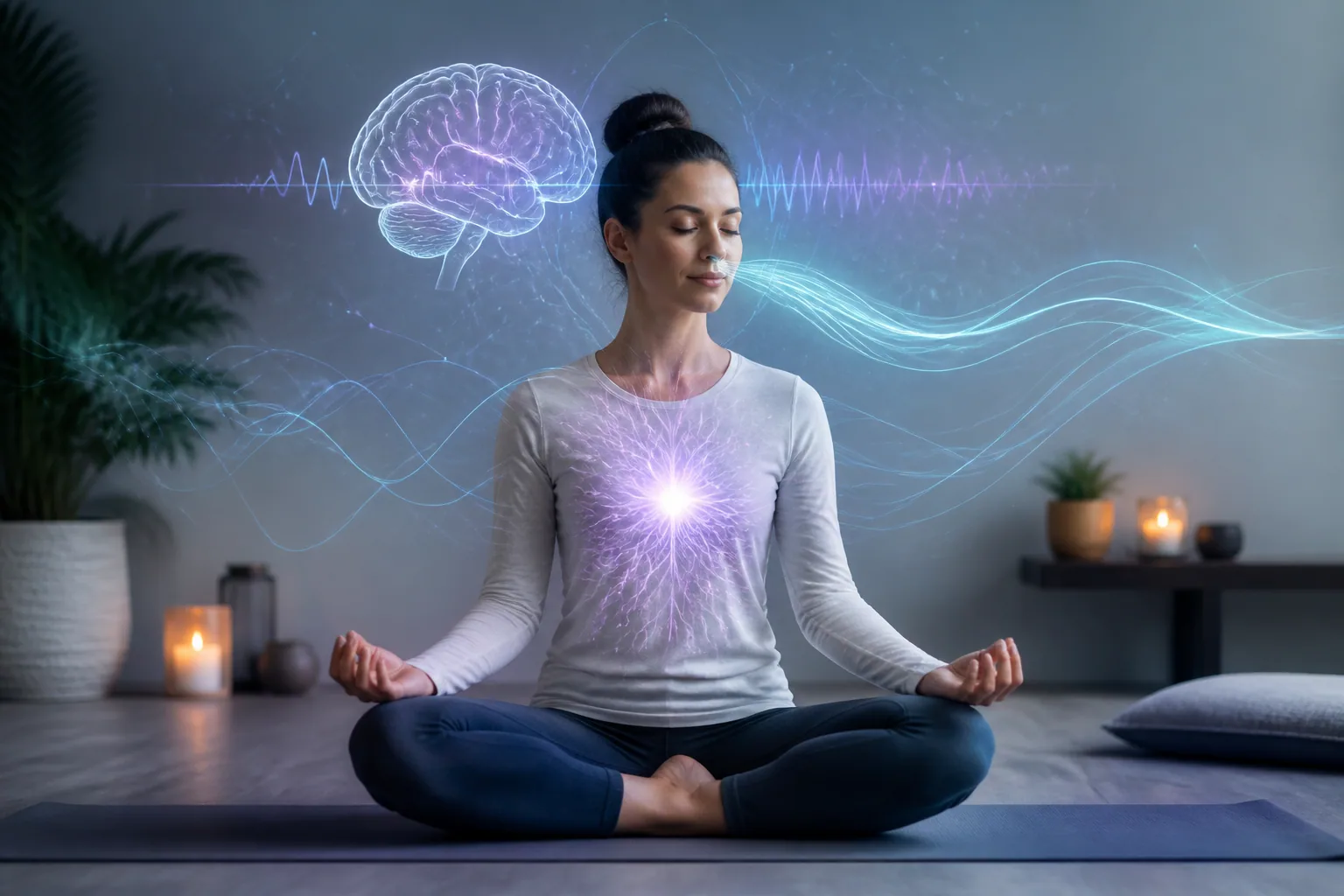
How Breathwork Shapes Your Brain: Neuroplasticity, Nervous System Reset, and Altered States
Breathwork is often introduced as a quick way to calm down, but that is only the beginning of the story. Breathing is one of the few body functions that is both automatic and voluntary, which means it can quietly influence your nervous system in real time. Over repeated practice, it may also shape how your brain responds to stress, attention, and emotion. That is why breathwork is drawing interest from neuroscientists, therapists, meditators, and wellness-minded readers who want more than a temporary relaxation trick.
In this article, we will look at the science-backed link between breathwork, neuroplasticity, and consciousness. We will explore why slow breathing can improve heart rate variability and vagal tone, how certain practices may shift brain activity and brain wave patterns, and why some more intense methods can surface strong emotional or even altered-state experiences. We will also cover safety, limits, and simple ways to begin a practice that supports both calm and consistency.
Why Breathwork Is More Than a Relaxation Hack
It is easy to think of breathwork as a wellness trend with a soothing playlist attached, but research suggests it can do more than create a pleasant moment. Breathing patterns affect blood gases, heart rhythm, autonomic balance, and neural signaling. In other words, the way you breathe is not just a reflection of your internal state, it helps create it. Slow, deliberate breathing can nudge the body toward parasympathetic activity, while rapid or forceful breathing can shift you toward activation and alertness.
This matters because many people live in a chronic stress pattern where the nervous system stays on guard even when there is no immediate threat. Breathwork gives you a direct, accessible point of intervention. Unlike many wellness practices, it does not require equipment, a long time commitment, or a special setting. The consistency of practice is often what creates the biggest changes over time, especially when the goal is nervous system regulation rather than a one-time calm-down.
The Brain-Breath Connection: How Breathing Talks to the Nervous System
Breathing is tightly linked to the autonomic nervous system, which includes the sympathetic branch associated with mobilization and the parasympathetic branch associated with recovery. When breath slows and becomes smoother, it can signal safety to the system. That signal is partly carried through the vagus nerve, which plays a major role in parasympathetic regulation, heart rhythm, digestion, and emotional steadiness.
This connection helps explain why breathing practices can influence mood and attention. The brain is constantly integrating signals from the body, including the pace and depth of the breath. In a review of respiration-timing-dependent brain effects, researchers noted that breath rhythms can interact with functional brain networks involved in attention, memory, and salience processing. That suggests breathing is not only a relaxation tool, but also a way of shaping how the brain allocates awareness and responds to experience pubmed.ncbi.nlm.nih.gov.
Neuroplasticity and Breath: Can Repeated Practice Rewire the Brain?
The word neuroplasticity gets used a lot, sometimes too casually, but the basic idea is important: the brain changes in response to repeated experience. Breathwork is one of those repeated experiences. When you practice calming, rhythm-based breathing over and over, you are not only learning a skill. You are rehearsing a different pattern of autonomic response, attention, and emotional regulation.
Current evidence suggests that breathwork may support plasticity mostly through functional changes rather than clearly proven structural brain changes. In plain terms, researchers have stronger evidence that breathing practices influence how networks work together, how the autonomic system responds, and how emotions are processed, than they do for large, long-term changes in gray matter or white matter. That is an important distinction. It means breathwork appears promising, but the field still needs more long-term neuroimaging studies before making big claims about permanent brain rewiring.
Still, the functional effects are meaningful. Repeated slow breathing may help the body become less reactive to stress signals, which can change how quickly you recover from anxiety, frustration, or overwhelm. Over time, that kind of training can feel like the difference between being pushed around by your nervous system and having some genuine influence over it.
How Slow Breathing Improves HRV and Vagal Tone
One of the most studied outcomes of slow breathing is improved heart rate variability, or HRV. HRV refers to the natural variation in time between heartbeats, and higher HRV is often associated with better autonomic flexibility and stress resilience. Slow-paced breathing, typically fewer than about 10 breaths per minute, has been shown to increase HRV and respiratory sinus arrhythmia in healthy people. A 2024 meta-analysis of 31 studies with 1,133 nonclinical participants found immediate benefits, including reduced systolic blood pressure and increases in time-domain HRV metrics such as RMSSD and SDNN, along with a modest decrease in heart rate link.springer.com.
There is also evidence that slow breathing can increase vagal tone and improve broader wellness measures. In a yogic breathing workshop for young adults, participants showed improvements in vagal tone, perceived stress, emotion regulation, and life satisfaction, and those benefits were still detectable one month later pubmed.ncbi.nlm.nih.gov. That kind of finding matters because it suggests breathwork can influence not just physiology, but also the way people relate to everyday stressors.
If you want a practical takeaway, this is it: slow breathing can help your body spend more time in a regulated state, and that repeated experience may gradually make calm feel more familiar. Familiarity is powerful. The nervous system learns from what it repeats.
Breathwork, Brain Waves, and Shifts in Consciousness
Breathwork does not only change how you feel physically. In some cases, it also changes the texture of consciousness itself. Slow-paced breathing has been associated with increased EEG alpha power and decreased theta power, which may reflect shifts in arousal, attention, and internal processing. Some fMRI studies have also found enhanced activity in cortical regions such as the prefrontal, motor, and parietal areas, as well as subcortical structures including the pons, thalamus, and hypothalamus pmc.ncbi.nlm.nih.gov.
At the other end of the spectrum, high-ventilation breathwork practices such as Holotropic-style methods can produce altered states of consciousness. Recent research found that these experiences can include euphoria, perceptual changes, and shifts in regional cerebral blood flow, alongside sympathetic activation journals.plos.org. This helps explain why some people describe breathwork as meditative, while others experience it as intense, cathartic, or even psychedelic-like.
These effects are not necessarily better or worse than each other. They are simply different. Slow breathing tends to support regulation and clarity, while intense methods may be better understood as experiential tools that can open powerful emotional and sensory material. The key is knowing which outcome you are actually seeking.
Resonance Breathing, Moon Breathing, and Other Techniques in Focus
Not all breathwork styles are created equal. Resonance-paced breathing, often around 5 to 7 breaths per minute, aims to align breathing with the body’s cardiovascular resonance frequency. This is one reason it is often associated with calm, coherence, and emotional steadiness. In a randomized controlled study, resonance breathing altered neural responses to emotion-related visual cues, suggesting it may influence how the brain processes emotionally charged information public-pages-files-2025.frontiersin.org.
Techniques like so-called moon breathing, which is usually framed as a soothing, cooling, or downshifting practice, often borrow from the same underlying principle: slower, smoother breathing with a focus on regulation. The exact label matters less than the mechanics. Gentle, steady rhythms tend to support parasympathetic activation, especially when the exhale is slightly longer or the pattern is comfortable enough to sustain without strain.
For many people, the best starting point is not an advanced method but a simple guided rhythm they can repeat daily. This is where a tool like Just Breathe: Relax Daily can be helpful, especially if you want structure without overthinking the technique. You can find it here: https://findthe.app/just-breathe-ujhm1e
CO₂ Sensitivity, Anxiety, and Retraining the Stress Response
One of the most interesting, and often overlooked, parts of breathwork is its relationship with carbon dioxide tolerance. People who chronically overbreathe may end up with low resting end-tidal CO₂, which can reinforce physiological discomfort and anxiety sensitivity. In anxious and healthy subjects, chronic hyperventilation has been associated with greater skin conductance responses, heightened anxiety sensitivity, and stronger physiological reactivity during paced hyperventilation tasks pmc.ncbi.nlm.nih.gov.
This helps explain why some people feel panicky when they breathe too rapidly or too deeply in the wrong context. CO₂ is not just waste gas. It is part of the body’s signaling system for breath drive and respiratory comfort. Research on CO₂ inhalation challenges has shown that panic disorder patients can have strong anxiety, dyspnea, and delayed recovery in response to 20% CO₂, pointing to a real link between CO₂ sensitivity and anxiety vulnerability pubmed.ncbi.nlm.nih.gov.
The practical implication is that some breathwork may help retrain the nervous system to tolerate normal variations in CO₂ without interpreting them as danger. This does not mean forcing discomfort. It means using gradual, manageable breath practices to help the body unlearn the habit of overreacting to internal sensations.
Emotional Processing: Why Breathwork Can Surface Feelings
Many people are surprised when a breathing session brings up tears, memories, or a sudden emotional wave. That is not necessarily a sign that something is wrong. When breathing patterns change, attention often turns inward, interoceptive signals become more noticeable, and the body may release tension it has been holding. In some cases, breathwork can create enough physiological and attentional shift to uncover feelings that have been pushed aside in the busyness of daily life.
This is one reason breathwork is sometimes used in therapeutic or contemplative settings. It can soften the usual defenses of the stress response and make emotional material more accessible. But that access should be handled carefully. Feeling more does not automatically mean healing more. What matters is whether the practice is paired with enough pacing, support, and aftercare to help the nervous system integrate what comes up.
Risks, Contraindications, and Why Intense Breathwork Isn’t for Everyone
Even though breathwork is often portrayed as gentle, more intense methods can carry real risks. Hyperventilation can cause hypocapnia, respiratory alkalosis, reduced cerebral blood flow, tingling, muscle cramps, syncope, and in rare cases seizures. Safety guidance commonly suggests caution or avoidance for people with heart conditions, respiratory disease such as asthma or COPD, uncontrolled hypertension, seizure history, psychosis, or pregnancy. Intense styles should also be approached carefully if you have a history of panic attacks or a strong sensitivity to bodily sensations scienceinsights.org.
This does not mean breathwork is dangerous in general. It means technique matters. Slow, comfortable breathing is very different from forceful overbreathing or prolonged retention practices. The safest approach is usually the most sustainable one: no straining, no chasing sensations, and no assuming that more intensity equals better results. If a practice leaves you dizzy, numb, or distressed, that is a cue to scale back, not push harder.
How Beginners Can Explore Breathwork Safely and Effectively
If you are new to breathwork, start with the simplest version possible. Aim for calm, even breathing at a comfortable pace, often around 5 to 6 breaths per minute if that feels natural. You can also begin with a short daily session, such as 5 minutes, and gradually extend it. Consistency matters more than duration. A few minutes each day is often more valuable than one dramatic session you never want to repeat.
A good beginner practice has a few shared qualities. The breath should feel smooth rather than forced. The body should stay relaxed. You should be able to speak or stop at any time without strain. Many people find it helpful to pair breathwork with visual pacing, ambient sound, or reminder-based routines, because the mind is more likely to stay with the breath when it has a gentle structure to follow.
It can also help to track how you feel before and after. Notice your heart rate, muscle tension, mood, and mental clarity. Breathwork is not only about whether you feel calm during the session. It is also about whether your nervous system becomes more resilient across the rest of the day.
The Future of Breathwork Research in Mental Health and Mindfulness
Breathwork research is moving in a promising direction, but it is still early. We have decent evidence for short-term effects on HRV, blood pressure, stress, and emotional reactivity. We also have intriguing studies on brain oscillations, emotion-related neural responses, and altered states. What we still lack are large, long-term studies that clearly map structural brain changes and identify which breathing methods work best for which people.
That is why the next phase of research will matter so much. Scientists still need to compare slow-paced, resonance-based, and more intense practices across different populations, including people with anxiety disorders, trauma histories, and chronic stress. They also need to clarify dose, frequency, safety, and how breathwork integrates with meditation, therapy, movement, and sleep. In the meantime, the evidence already supports a thoughtful conclusion: breath is not just an input to the body, it is a trainable pathway into regulation, attention, and, sometimes, altered consciousness.
If you approach it gradually, breathwork can become more than a stress-relief hack. It can be a way of teaching your nervous system a new default. And for many people, that is where the real transformation begins.