The Dental Fallout of Mouth Breathing: How Your Breathing Pattern Impacts Oral Health & What You Can Do
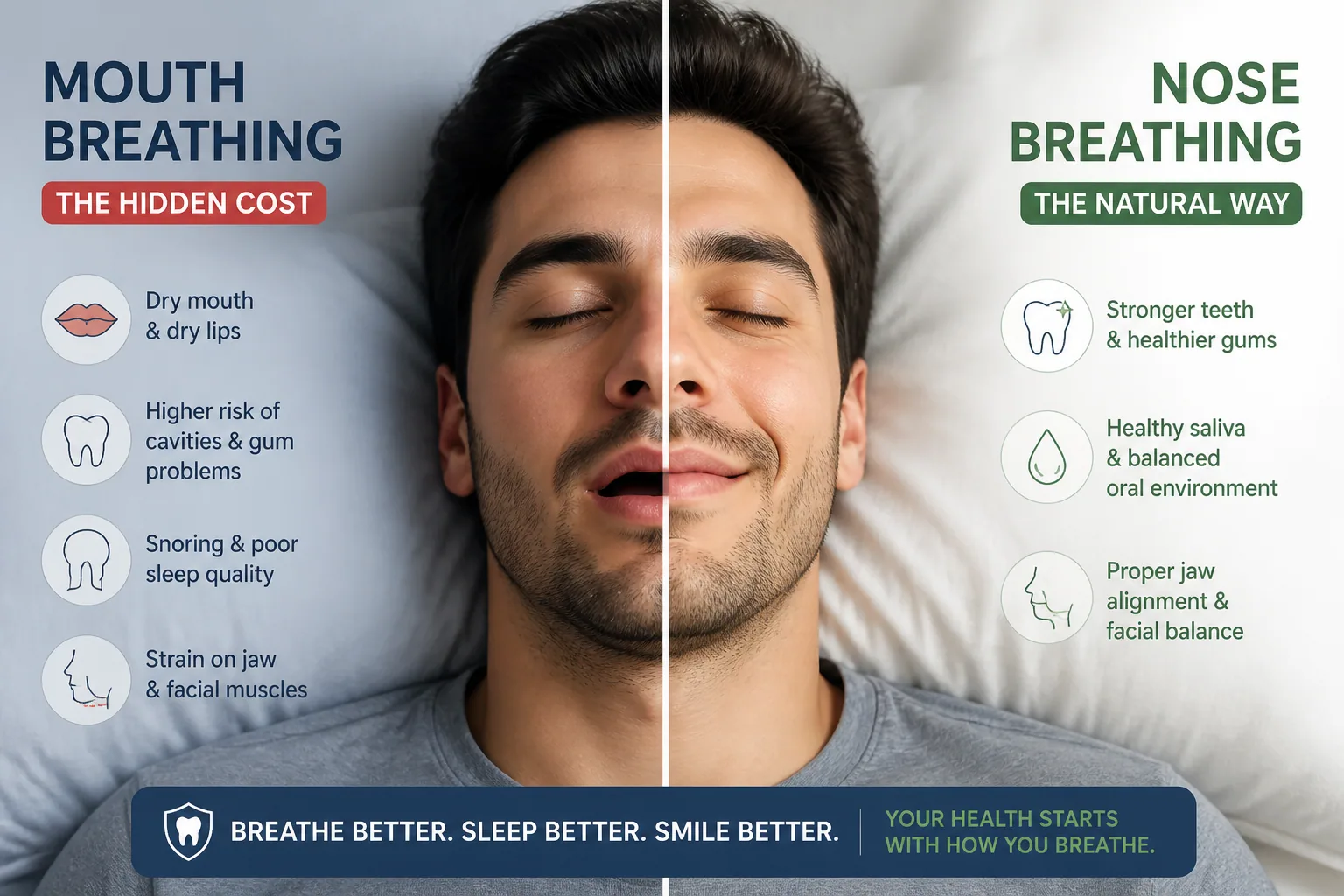
Mouth breathing can seem harmless at first. Maybe it happens during a cold, during exercise, or after a long day when you are tired and congested. But when it becomes a habit, it can affect much more than comfort. Chronic mouth breathing changes how saliva protects your teeth, how the mouth stays hydrated, how plaque behaves, and even how the jaws and face develop over time. It can also be tied to sleep problems that keep the cycle going.
In other words, breathing is not just about air. The way you breathe shapes the environment inside your mouth. Healthy nasal breathing supports filtration, humidification, and nitric oxide production. Mouth breathing, on the other hand, tends to dry the mouth out, lower pH, and reduce some of the natural defenses that help keep gums and teeth healthy.
Why Mouth Breathing Deserves More Attention
A lot of people still think of mouth breathing as a minor habit, but the research suggests it deserves a closer look, especially in children and in people who already struggle with dry mouth, snoring, or periodontal issues. A systematic review of 11 observational studies found that children and adolescents who breathe through their mouths show significantly more gingival bleeding, plaque accumulation, and altered gingival health compared with nasal breathers. The same review also linked mouth breathing with initial and advanced dental caries, although the evidence was stronger for plaque and gum inflammation than for cavities themselves. Source: https://pubmed.ncbi.nlm.nih.gov/40739849/
That matters because plaque and gingival inflammation are not just surface-level concerns. Once the oral environment becomes drier and more acidic, bacteria can thrive more easily, and the mouth loses some of its natural buffering capacity. For many people, mouth breathing is also part of a bigger pattern involving snoring, blocked airways, or poor sleep, which means the oral effects and the sleep effects can feed into one another.
What Counts as Healthy Nasal Breathing vs. Chronic Mouth Breathing
Healthy nasal breathing is quiet, steady, and mostly through the nose both day and night. The nose filters incoming air, warms it, and humidifies it before it reaches the lungs. It also helps reduce the load of bacteria and toxins entering the airway directly. Cleveland Clinic explains that nasal breathing filters, warms, and humidifies air, and helps reduce bacterial and toxin exposure compared with mouth breathing. Source: https://health.clevelandclinic.org/breathe-mouth-nose
Chronic mouth breathing is different. It usually means the mouth is open for long periods, even when you are resting, sleeping, or concentrating. Some people do this because the nose feels blocked. Others do it out of habit. Over time, it can become the body’s default pattern, which means the lips stay apart, the tongue rests low, and saliva evaporates more quickly.
A simple way to think about it is this: nasal breathing supports the mouth’s natural protection system, while habitual mouth breathing bypasses it.
Common Causes of Habitual Mouth Breathing
Mouth breathing usually does not start for no reason. In many children, enlarged adenoids or tonsils are a major cause. When the upper airway is crowded, the body often chooses the easiest route for air, which is the mouth. In these cases, treating the obstruction can matter a great deal because early removal during growth periods may help normalize breathing and reduce or even reverse some facial growth abnormalities.
In adults, common causes include nasal congestion from allergies, chronic sinus issues, structural blockage such as a deviated septum, and sleep-disordered breathing. Stress and poor posture can also contribute. When the head juts forward and the jaw drops, the mouth tends to stay open more often. So mouth breathing can be a symptom, a coping strategy, or a consequence of another problem that needs attention.
What Mouth Breathing Does to Saliva, Oral pH, and the Mouth’s Natural Defenses
Saliva is one of the mouth’s most important defense systems. It helps rinse away food particles, buffers acids, protects enamel, and supports tissue health. When you breathe through your mouth, saliva evaporates faster, and the mouth becomes drier. Research comparing mouth breathers with nasal breathers found lower salivary flow rates, lower salivary pH, and higher counts of mutans streptococci in the mouth breathing group, all of which raise the risk of dental caries and periodontal disease. Source: https://codental.uobaghdad.edu.iq/wp-content/uploads/sites/14/2021/03/Oral-Health-Status-Salivary-Physical-Properties-and-Salivary-Mutans-Streptococci-Among-A-Group-of-Mouth-Breathing-Patients-in-Comparison-to-Nose-Breathing.pdf
The pH piece is especially important. During sleep, forced mouth breathing can drop intraoral pH to around 6.6, compared with about 7.0 in nasal breathing. That may not sound like a huge difference, but over a whole night the more acidic environment can increase the risk of enamel erosion and cavities. Source: https://pubmed.ncbi.nlm.nih.gov/26666708/
When saliva flow drops and acidity rises, the mouth becomes a friendlier place for harmful bacteria and a less protective place for teeth and gums. That is one reason chronic dry-mouth sleepers often wake up with bad breath, sticky tissues, or a sore throat.
The Link Between Mouth Breathing, Cavities, Plaque, and Gum Inflammation
The most consistent dental findings linked to mouth breathing are plaque buildup and gingival inflammation. Plaque is sticky, and when the mouth is dry it can accumulate more easily and be harder to remove. The gum line can then respond with redness, swelling, and bleeding. In children and teens, the systematic review mentioned earlier found significantly more gingival bleeding and plaque accumulation among mouth breathers than among nasal breathers. Source: https://pubmed.ncbi.nlm.nih.gov/40739849/
Cavities can also be part of the picture, but the evidence is a little less straightforward than it is for plaque and gum issues. This makes sense biologically. A dry, acidic mouth reduces the protective effects of saliva, and bacteria associated with tooth decay may flourish more easily. Still, not everyone who mouth breathes will develop cavities, and oral hygiene, diet, fluoride exposure, and genetics all matter too.
So if you are seeing stubborn plaque, frequent bleeding when brushing, bad breath, or recurring decay despite decent hygiene, breathing pattern is one factor worth examining.
How Breathing Patterns Can Influence Jaw Growth, Bite, and Facial Development
In children, mouth breathing can do more than change the inside of the mouth. It can influence how the jaws and face grow. Research summarized in a review on dentofacial development reports that habitual mouth breathing is linked to a narrowed maxillary arch, high palate, increased facial vertical height, crossbites, open bites, mandibular rotation or retraction, and increased overjet. Source: https://pmc.ncbi.nlm.nih.gov/articles/PMC9498581/
This does not mean mouth breathing automatically causes every one of these changes in every child. Growth is complex, and genetics still matter. But when the tongue rests low and the mouth stays open, the pressure balance in the oral cavity changes. The tongue no longer supports the upper arch the way it normally should, and the face may adapt over time to a more open-mouth posture.
That is why early intervention matters. If enlarged adenoids, tonsils, or other airway issues are behind the habit, addressing them early can help protect normal development. In growing children, the combination of airway treatment, myofunctional support, and orthodontic guidance can make a real difference.
Why Children, Snorers, and Dry-Mouth Sleepers Are Especially at Risk
Children are vulnerable because their faces and jaws are still developing. If mouth breathing becomes the dominant pattern during growth, the changes can be more pronounced. That is why pediatric dentists, orthodontists, and ENTs often pay close attention to open-mouth posture, snoring, and restless sleep.
Snorers and dry-mouth sleepers are also at higher risk because nighttime is when saliva production naturally drops. Add open-mouth breathing on top of that, and the mouth can become extremely dry by morning. People often notice a sore throat, cracked lips, bad breath, or a tongue that feels coated when they wake up.
If a person also has sleep-disordered breathing, the breathing pattern may be both a symptom and a clue. In those cases, the goal is not just to close the mouth. The bigger goal is to understand why the body is choosing that pattern and to correct the underlying cause.
What Nasal Breathing Restores: Filtration, Humidification, and Nitric Oxide Benefits
Nasal breathing restores several things the mouth simply cannot do as well. First, the nose filters air through its structures and mucosa, helping trap dust, pollen, and other particles before they travel deeper into the airway. Second, it warms and humidifies the air, which is gentler on the throat and lungs. Third, it supports nitric oxide production in the nasal passages.
Nitric oxide is one of the reasons nasal breathing gets so much attention. Research notes that nasal passages contribute significantly to nitric oxide production, and inhaling through the nose can increase oxygen uptake, support vasodilation, and enhance pulmonary function compared with mouth breathing. Source: https://pubmed.ncbi.nlm.nih.gov/8971255/
For oral health, the biggest benefit is indirect but powerful. A better breathing pattern supports a better mouth environment. More humidity means less drying. Better filtration means less irritation. Better sleep breathing can also reduce morning dryness and the cycle of inflammation that often follows it.
Breathwork Techniques to Encourage Nasal Breathing Safely
Breathwork will not fix a blocked nose, and it will not replace medical care when there is an obstruction. But it can help reinforce nasal breathing as a habit when the airway is open enough. Simple, low-stress drills are often the best place to start.
One approach is gentle nose-only breathing practice while seated, with the lips softly closed and the tongue resting on the palate. Start with a few minutes of slow, quiet breathing through the nose. Keep it comfortable. If you feel air hunger, dizziness, or strain, stop and return to normal breathing.
School-based breathing programs focused on nasal breathing and breath control have shown improvements in functional breathing measures such as BOLT score and breath-hold time over months. Source: https://ojs.umb.sk/index.php/SJSS/article/view/466
There is also evidence that simple nasal breathing exercises can improve relaxation and reduce negative affect in children under stress, although their direct effect on oral symptoms still needs more study. Source: https://pubmed.ncbi.nlm.nih.gov/35704507/
The key is not intensity. It is consistency. Short, repeatable practice tends to work better than forcing a dramatic change all at once.
Daily Habits That Support Better Breathing and Oral Health
Small daily habits can make nasal breathing easier to maintain. If allergies or congestion are a factor, address them with your clinician. If posture is part of the problem, pay attention to head position and screen height. If your mouth opens during focus tasks, check in with yourself periodically and reset to a soft lip seal.
Hydration matters too. A well-hydrated body is less likely to feel dry, especially at night. Bedroom air can also make a difference. Very dry indoor air may worsen mouth dryness, so consider environmental support like humidification when appropriate.
Oral hygiene becomes even more important if you are a mouth breather. Brush thoroughly, floss daily, and keep up with professional cleanings. If your dentist has recommended fluoride products, follow that guidance carefully. When the mouth is dry, preventive care tends to matter more, not less.
Mouth Taping, Nasal Strips, and Other Tools: What to Know Before You Try Them
Tools can be helpful, but they are not one-size-fits-all. Nasal strips may help some people feel less congested at night. Mouth taping is sometimes used to encourage lip closure during sleep, but it should be approached cautiously. It is not appropriate if you have significant nasal obstruction, suspected sleep apnea, anxiety about breathing restriction, or any condition that makes nasal breathing unreliable.
If you are considering mouth taping, it is best to discuss it with a dentist or sleep specialist first, especially if you snore, wake gasping, or feel excessively sleepy during the day. The goal is safe, sustainable nasal breathing, not simply forcing the mouth shut.
For some people, a structured breathing practice can be a safer and more flexible support than physical restraint. A tool like Just Breathe: Relax Daily can help you build a consistent breathing routine with guided patterns, reminders, and soothing visual cues. You can explore it here: https://findthe.app/just-breathe-ujhm1e
When to See a Dentist, Orthodontist, ENT, or Sleep Specialist
If mouth breathing is occasional, it may not require a specialist. But if it is frequent, persistent, or tied to symptoms, it is worth getting evaluated. See a dentist if you notice persistent dry mouth, bleeding gums, bad breath, plaque that keeps returning, tooth sensitivity, or frequent cavities.
An orthodontist can help when bite changes, crowding, open bite, crossbite, or narrow palate are becoming visible. An ENT is appropriate when nasal obstruction, enlarged tonsils or adenoids, chronic sinus issues, or structural blockage may be driving the habit. A sleep specialist is important if you snore loudly, wake unrefreshed, gasp at night, or have daytime sleepiness, because breathing habits during sleep may reflect sleep-disordered breathing.
In children, early evaluation is especially important because growth is still happening. The earlier the airway issue is recognized, the more options there usually are to guide function and development in the right direction.
How Long It Takes to Notice Improvements
How quickly things improve depends on the cause. If the issue is mainly habit, some people notice better comfort, less dryness, and easier nasal breathing within days or weeks once they begin practicing consistently. If congestion, allergy, or airway obstruction is involved, improvements may take longer and often require treatment of the underlying issue.
Oral symptoms like morning dryness and bad breath may start to improve first. Gum inflammation and plaque control can improve over time with better saliva support and hygiene. Structural or developmental changes, especially in children, are slower and depend on age, growth stage, and whether the cause is treated early.
So it helps to set realistic expectations. Breathing comfort may improve relatively quickly. Sleep quality may take longer. Dental and facial changes take the most time and usually need professional guidance.
A Simple Plan to Start Improving Your Breathing Pattern Today
Start with awareness. Notice when your mouth opens during the day and at night. Is it when you are concentrating, stressed, congested, or lying down? The pattern gives you clues about the cause.
Next, support the nose. Address allergies or congestion, keep hydration up, and make your sleep environment as comfortable as possible. Then practice short periods of gentle nasal breathing during calm moments, rather than trying to force it during stress.
Finally, watch for signs that you need professional help. If breathing feels restricted, if sleep is poor, or if dental problems are piling up, do not wait. Mouth breathing can be a habit, but it can also be a symptom. Treating it well means looking at both.
The good news is that breathing patterns can change. With the right support, many people can reduce dryness, protect oral health, and make nasal breathing their default again.