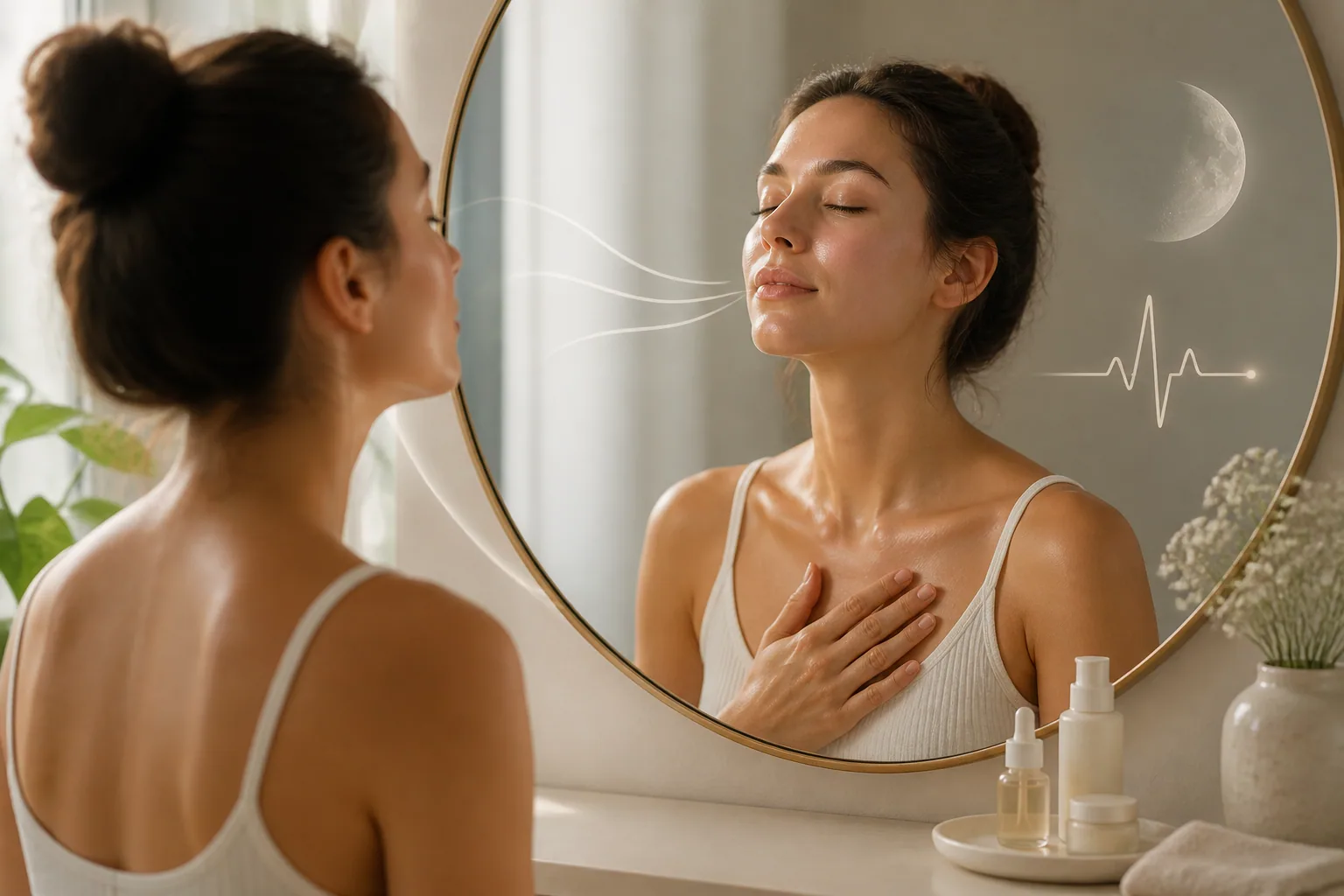
Unclog Stress from Your Skin: How Breathwork Supports a Radiant, Clear Complexion
Your skin does not just reflect what you put on it. It often reflects what is happening inside your body too, especially when stress is running the show. If you have ever noticed more breakouts before a big deadline, redness after a tense week, or skin that looks tired even when you are using great products, you are not imagining it. Stress can show up on the face in very real ways, and breathwork is one of the simplest tools that may help calm that chain reaction from the inside out.
Breathwork will not replace a solid skincare routine, but it can support the conditions your skin needs to look healthier, calmer, and more resilient. By influencing the nervous system, circulation, oxygen delivery, and stress hormones, conscious breathing may help reduce some of the internal pressure that contributes to dullness, inflammation, and flare-ups. The goal here is not perfection. It is to make your skin routine more effective by pairing it with something your body already does all day long: breathing.
Why Stress Shows Up on Your Skin
When stress becomes chronic, the body shifts into a more alert state for longer than it should. That matters for skin because stress does not stay neatly in your head. It can affect hormones, immune activity, oil production, and barrier function. Research shows that stress can influence acne, psoriasis, eczema, and other chronic skin conditions through increased secretion of cortisol, ACTH, and CRH, both systemically and within skin cells. Those signals can drive inflammation, increase sebum production, and disrupt the skin barrier.
That stress-skin connection helps explain why your complexion may look more reactive during busy or emotionally draining periods. A prospective study of 22 university students found that acne severity increased significantly during exam stress, and that increase correlated with higher perceived stress even after accounting for sleep, diet, and meal frequency. In other words, stress itself can matter, not just the lifestyle changes that come with it. Source: https://www.jamanetwork.com/journals/jamadermatology/fullarticle/479409
There is also evidence that psychological stress can worsen the skin barrier by activating 11β-HSD1 and the HPA axis, which raises local cortisol and can impair wound healing and the proliferation of skin-supporting cells like keratinocytes and fibroblasts. That means stress can affect how well skin repairs itself, not just how it looks in the moment. Sources: https://www.sciencedirect.com/science/article/pii/S0149291820301715 and https://academic.oup.com/bjd/article/185/1/12/6600192
The Skin-Breath Connection: What Conscious Breathing Actually Does
Breathwork is useful because breathing is one of the few body functions that is both automatic and consciously controllable. That makes it a direct bridge into your nervous system. Slow, intentional breathing can help shift the body away from a high-alert stress response and toward a calmer parasympathetic state. When that happens, heart rate may slow, muscle tension can ease, and stress signaling may decrease.
In a pilot randomized controlled trial, deep diaphragmatic breathing after an acute stressor significantly lowered salivary cortisol and inflammatory cytokines while increasing respiratory amplitude, heart rate variability, and parasympathetic activation compared with control conditions. That is important for skin because lower stress signaling may mean less inflammatory pressure on the complexion overall. Source: https://pmc.ncbi.nlm.nih.gov/articles/PMC11636440/
Another study found that brief structured breathing practices such as cyclic sighing, box breathing, and hyperventilation with retention improved mood and reduced physiological arousal with just 5 minutes a day for a month, with cyclic sighing especially effective. Since many skin flare-ups are aggravated by tension and stress arousal, even a short daily breathing habit may support better skin by keeping your system steadier. Source: https://pmc.ncbi.nlm.nih.gov/articles/PMC9873947/
How Better Circulation and Oxygen Delivery Support Glow and Repair
Healthy skin depends on circulation. Blood flow brings oxygen and nutrients to skin cells and helps remove waste products. That matters because the skin is metabolically active, and its oxygen needs are not as simple as they seem. Physiological oxygen levels in the epidermis and dermal appendages are naturally low, and skin cell metabolism, proliferation, pigmentation, angiogenesis, and redox balance all respond to those oxygen gradients. If circulation is sluggish or stress disrupts oxygen delivery, the skin can drift toward a duller, more fragile state. Source: https://www.sciencedirect.com/science/article/pii/S089158492400532X
Slow breathing appears to support that system. Research on slow breathing around 5 to 6 breaths per minute found increased coupling between breathing, transcutaneous oxygen pressure, and skin capillary blood flow, especially when baseline skin oxygenation is low. That suggests that slower respiration can improve peripheral microcirculation, which is exactly the kind of support skin needs when it looks tired or depleted. Source: https://www.sciencedirect.com/science/article/abs/pii/S1350453316302557
There is also evidence that deep breathing can influence cutaneous vasodilation, meaning it may help skin blood flow under certain conditions by shifting sympathetic activity. A classic human study observed a transient drop in sympathetic activity followed by increased skin perfusion after a deep breath in cold conditions. More recently, a pilot study using camera-based photoplethysmography found that slow deep breathing enhanced microcirculation and synchronized vascular oscillations in the plantar foot. While these studies are not about facial skin specifically, they support the broader idea that breathing can affect peripheral circulation and vascular tone. Sources: https://pmc.ncbi.nlm.nih.gov/articles/PMC2231291/ and https://www.sciencedirect.com/science/article/pii/S0010482525003476
Breathwork, Cortisol, and the Breakout-Inflammation Cycle
One of the biggest reasons breathwork is so interesting for skin health is its potential impact on the stress hormone cycle. Cortisol is not the enemy, but when it stays elevated too long, the skin can feel the effects. Increased cortisol can contribute to inflammation, oiliness, barrier disruption, and slower healing, all of which can make breakouts look worse and last longer.
When you practice breathing that encourages parasympathetic activation, you may help reduce the intensity of that stress loop. Less physiological arousal can mean less signal for the body to stay in a reactive state. In practical terms, that may help your skin stop feeling like it has to brace for impact every time life gets busy. The research on deep diaphragmatic breathing and reduced cortisol is especially encouraging here, because it points to a measurable stress response shift rather than just a subjective feeling of calm. Source: https://pmc.ncbi.nlm.nih.gov/articles/PMC11636440/
This does not mean breathwork will erase acne or prevent every flare-up. But it may help lower the background stress load that can make inflammatory skin issues harder to manage. That is a meaningful win, particularly if your skin tends to react to emotional strain, lack of downtime, or sleep disruption.
Can Breathwork Help with Acne, Eczema, and Dullness?
Breathwork is not a cure, but it may be a useful support tool for several common skin concerns. For acne, the link is especially clear because stress can influence sebum production and inflammation, two major pieces of the breakout puzzle. If your acne worsens during exams, work pressure, or emotional stress, breathwork may help reduce one of the triggers that keeps the cycle going.
For eczema, the main benefit may come from calming stress-driven barrier disruption and itching-related tension. Stress can aggravate flare-ups and make the skin feel more sensitive overall, which is why a breathing practice that helps you downshift may pair well with your treatment plan and moisturizing routine. For dullness, slower breathing and better circulation may support more oxygen delivery and improved microflow, which can translate into a healthier-looking glow over time.
The key idea is support, not substitution. Breathwork works best as part of a wider skin wellness strategy that includes good cleansing, moisture barrier support, sun protection, sleep, and if needed, dermatology care. Think of it as one more lever you can use to reduce the stress burden on skin so your products and habits can do their job more effectively.
Morning Breathwork Rituals to Wake Up Tired Skin
Morning is a powerful time to reset the nervous system before the day starts asking things of you. If your skin wakes up looking puffy, flat, or tired, a short breathing ritual can help you feel more awake and grounded at the same time. The goal is not to force energy. It is to create a steady, clear signal to your body that the day can begin without panic.
A simple morning routine can be as short as 3 to 5 minutes. Try sitting near natural light, relaxing your jaw, and breathing in through the nose for 4 counts, out for 6 counts. That slightly longer exhale is often the easiest way to encourage calm. If you want a more activating version, use a few rounds of energizing breath or a slightly faster paced rhythm, but keep it controlled so you do not create more stress than you remove.
Pair that with a gentle cleanse or splash of cool water afterward. The combination can help you feel more alert while setting a calmer tone for the rest of your skincare routine. A morning breath practice is especially useful on days when your skin looks red or sleep-deprived, because it can help you start from a less reactive place.
Evening Breathing Practices to Calm Skin and Mind
Evening breathwork is where many people feel the most skin benefits, because nighttime is when the body shifts into repair mode. If your skin tends to look flushed after a long day, or if stress keeps you from unwinding before bed, a calming breathing ritual can help soften that edge. Lower stress arousal in the evening may also support better sleep, and sleep is one of the most underrated factors in skin recovery.
A good evening pattern is slow, simple, and repetitive. Box breathing can work well if your mind is busy because the structure gives your attention something to hold onto. Relaxation breath, with a longer exhale than inhale, may be even better if you are trying to get ready for sleep. Spend 5 minutes breathing before applying moisturizer or while waiting for your serum to absorb, so the practice fits naturally into your routine.
If you are prone to eczema, redness, or sensitive skin, evening breathwork can be especially helpful because it may reduce the tension that makes your skin feel more reactive at the end of the day. A calmer nervous system can make your whole bedtime ritual feel more restorative, not just more disciplined.
Post-Exercise Breath Resets for Redness and Recovery
Exercise is excellent for circulation and overall health, but it can also temporarily increase facial flushing, heat, and visible redness. That is normal, yet a simple breathing reset after your workout can help your body transition out of exertion mode more smoothly. Instead of going straight from sweaty and stimulated to rushing through the rest of your day, pause for a few minutes to regulate your breath.
After exercise, sit down, lower your shoulders, and use slow nasal breathing with an extended exhale. You can also try a gentle box breathing pattern if your heart rate is still elevated. The point is to help your nervous system settle so the redness does not feel amplified by stress or haste. Because slow breathing can support microcirculation and autonomic balance, it may be a helpful bridge between workout recovery and skin recovery. Source: https://www.sciencedirect.com/science/article/abs/pii/S1350453316302557
This can be especially useful if you notice post-workout breakouts or irritation. Sweat, friction, and a stressed nervous system can be a rough combination for the skin. A brief breathing reset, followed by cleansing and hydration, is a small habit that can make post-exercise care feel less rushed and more intentional.
How to Match Breathing Patterns to Your Skin and Stress Triggers
Not every breathing pattern does the same thing, and that is a good thing. Different skin days call for different support. If you feel anxious, overstimulated, or break-out prone during stressful periods, a slower pattern with longer exhalations can be a strong default. If you feel flat, sluggish, or mentally foggy, a more energizing breathing rhythm may help you wake up without overstressing the system.
Here is a simple way to think about it. Cardiac coherence or slow rhythmic breathing can be helpful when your skin seems reactive or inflamed. Box breathing can help if stress makes you scattered and tense. Relaxation breath is useful when the goal is sleep and repair. Energizing breath can fit mornings or pre-work periods when you want to feel more awake. Custom patterns are useful if you already know what feels best for your body.
The strongest approach is to observe your own patterns. Do your breakouts flare after deadlines? Does redness follow poor sleep? Does eczema worsen when you are emotionally overwhelmed? Once you know your triggers, you can choose a breathing pattern that addresses the emotional and physiological state behind the flare-up, not just the skin symptom on the surface.
Using Visual Guides Like Heart-Pulse and Moon Animations for Better Results
One of the biggest reasons breathwork falls off is not lack of intention. It is lack of rhythm. Visual guides can solve that by giving your breath something easy to follow. A heartbeat-style animation can help with steady, coherence-based breathing, while a moon-inspired visual can make the practice feel softer and more soothing at night.
This matters because the easier a breathing pattern is to follow, the more likely you are to keep doing it. Gentle pacing cues can also keep your inhale and exhale from drifting into a rushed or uneven rhythm when your mind is busy. For people who are new to breathwork, a visual guide can turn a vague wellness idea into something concrete and repeatable.
If you want a modern, easy way to build that habit, the app Just Breathe: Relax Daily offers guided breathing patterns, beautiful animations like Heartbeat and Moon, ambient sounds, and smart reminders to help you stay consistent. You can learn more here: https://findthe.app/just-breathe-ujhm1e. For skin care routines that depend on consistency, that kind of support can make a real difference.
How to Pair Breathwork with Your Existing Skincare Routine
Breathwork works best when it is woven into habits you already do. That makes it easier to remember and more likely to stick. Instead of treating it as one more task, attach it to the skincare steps already in your day. For example, use 3 minutes of slow breathing after cleansing, during a mask session, or while waiting for a moisturizer to sink in.
In the morning, breathwork can be paired with cleansing, serum application, or SPF. In the evening, it can become the first thing you do after washing your face or the last thing you do before bed. If you are having an intense day, even a short breathing reset before touching your skin can help you apply products more gently and mindfully.
That pairing is useful because stress often changes how we behave, not just how we feel. When we are tense, we rush through routines, pick at skin, or skip steps that matter. Breathwork can interrupt that momentum and bring a little more care back into the process.
Small Daily Habits That Support a Clearer, More Radiant Complexion
The most effective skin habits are often the smallest ones repeated consistently. Breathwork is powerful partly because it is accessible. You do not need special equipment, a long schedule, or perfect conditions. You just need a few quiet minutes and a pattern you can stick with.
A practical daily approach might look like this: 5 minutes of slow breathing in the morning, a 2 minute reset after a stressful event, and 5 minutes of calming breath at night. Add hydration, a basic skincare routine, regular sleep, and moments where you deliberately slow down. Over time, those small choices can reduce the stress load that shows up on your skin.
If your complexion is dealing with acne, redness, eczema, or dullness, it can be encouraging to know that skin care is not only about what goes on the skin. It is also about what you do for your nervous system, your circulation, and your recovery. Breathwork offers a simple, low-cost way to support all three, which is why it fits so naturally into a modern beauty and wellness routine.