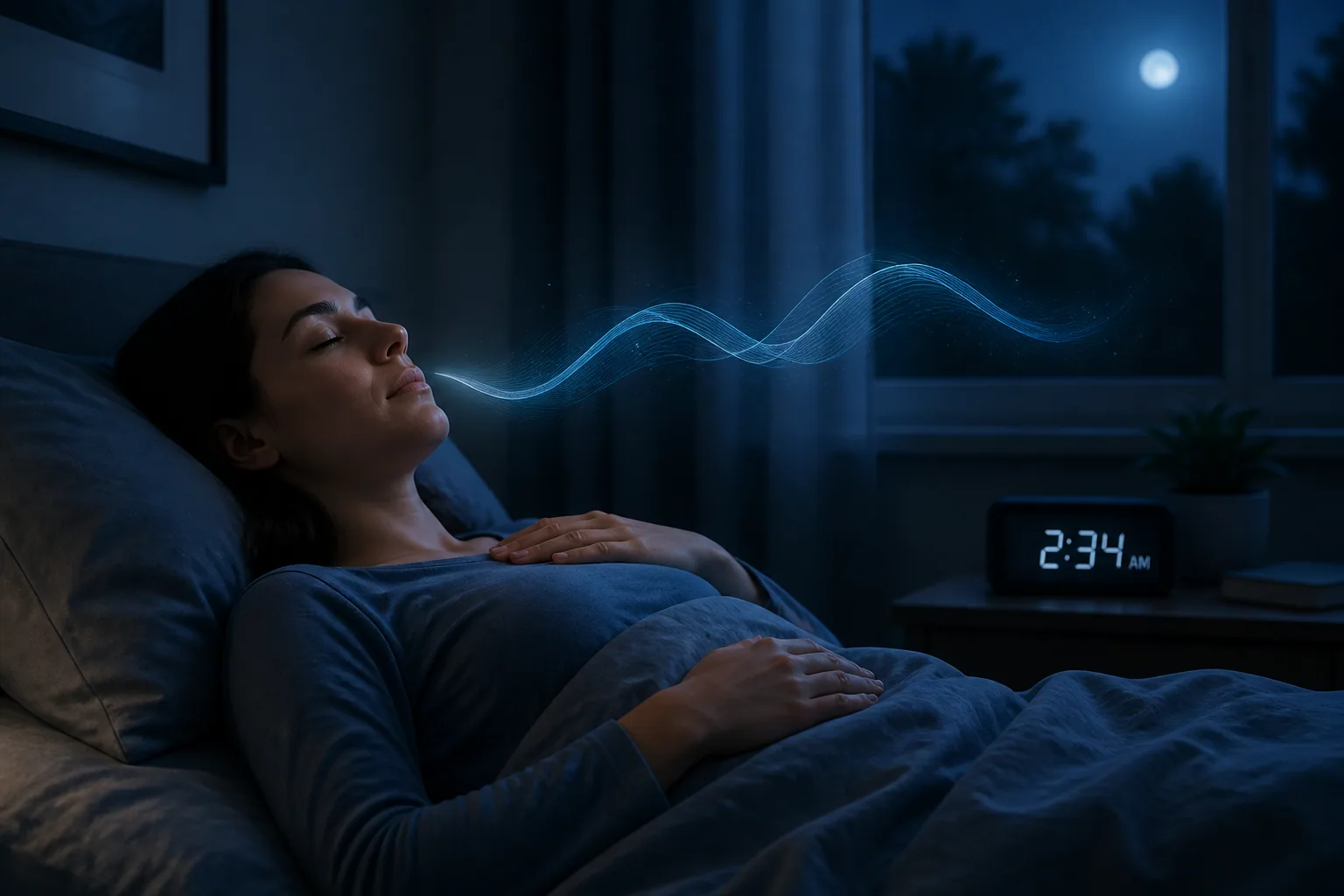
Why You’re Still Not Sleeping: How Breath Control Turns Nights Around
If you have tried the usual sleep advice and still end up staring at the ceiling, you are not alone. A colder room, less caffeine, no screens, and earlier bedtimes can help, but they do not always solve the real problem: your nervous system may still be on alert. When your body is in a mild state of stress, sleep does not simply arrive because the room is dark. Breath control can help because breathing is one of the fastest ways to influence the autonomic nervous system, shift heart rate, and signal safety to the brain. In other words, the right breathing pattern can do more than relax you. It can create the internal conditions that make sleep easier to start and easier to maintain.
In this article, we will look at why standard sleep tips sometimes fall short, how breathing tempo and depth change your physiology, what the research says about breath control for sleep, and which techniques are most useful depending on whether you are trying to fall asleep at bedtime or settle back down after waking in the night. We will also cover who may benefit most, common mistakes that reduce effectiveness, and a simple 7-night plan you can try tonight.
Why Sleep Tips Fail When Your Nervous System Is Still on High Alert
Most sleep advice targets your environment and habits. That matters, but it does not directly address hyperarousal. Hyperarousal is the state where your body stays a little too ready for action. Your mind may feel tired, but your heart rate, muscle tone, and stress response still suggest vigilance. This is common in insomnia, high-stress periods, shift work, parenting fatigue, and even after a day that felt emotionally heavy.
When that state continues at night, your sleep drive can be strong and still not fully override the alert system. You may lie down exhausted, then notice your breathing is shallow, your jaw is tight, or your thoughts keep looping. Sleep hygiene can reduce some of the friction, but breath control works in a more direct way because it changes the rhythm of the nervous system in real time.
That is the key idea behind using breathing for sleep. Instead of only preparing the bedroom for rest, you are teaching the body how to downshift. When breathing slows and lengthens, the body receives a repeated signal that the emergency is over. Over time, this can help you fall asleep faster, wake less often, and recover more quickly after middle-of-the-night awakenings.
How Breathing Tempo and Depth Affect Relaxation and Sleep
Breathing has two major levers: tempo and depth. Tempo is how fast you breathe. Depth is how much air you move with each breath. Both matter. Fast, shallow breathing tends to keep the body in a more activated state. Slow, gentle breathing encourages parasympathetic activity, sometimes described as the rest and digest branch of the nervous system.
Research suggests that slow breathing around 6 breaths per minute can increase baroreflex sensitivity and reduce sympathetic tone, which is linked to lower blood pressure and a calmer state. A 2026 systematic review of nine studies and 457 participants found that slow breathing before bedtime, defined as 10 breaths per minute or fewer, reliably improved self-reported sleep duration and quality. That is an important signal because it suggests the effect is not just anecdotal, but repeatable across multiple studies. Source: https://www.sciencedirect.com/science/article/pii/S1087079226000560
Depth also matters because overly forceful breathing can backfire. The goal is not to gulp air. The goal is to breathe more fully from the diaphragm, with a smooth and quiet expansion of the belly and lower ribs. Diaphragmatic breathing has been associated with reduced stress markers and better lung function, and it is especially useful when stress or anxious arousal is part of the sleep problem. Source: https://www.fammed.wisc.edu/files/webfm-uploads/documents/outreach/im/tool-power-of-breath-diaphragmatic-breathing.pdf
When tempo slows and breathing becomes deeper but relaxed, your heart rate often drops, your muscles ease, and the brain starts to move away from the problem-solving mode that keeps sleep out of reach. This is why breath control can work even on nights when you feel wired or restless.
What Research Says About Breath Control for Falling Asleep Faster
The research on breathing and sleep is growing, and several findings are especially relevant if you want a practical method rather than abstract theory. In a pilot trial involving people with self-reported insomnia, a single 20-minute slow-breathing session at around 0.1 Hz, which is about one breath every 10 seconds, before bed led to shorter sleep onset latency, fewer awakenings during the night, and better subjective sleep quality. That means participants fell asleep faster, stayed asleep better, and felt that sleep was better overall. Source: https://www.nature.com/articles/s41598-020-64218-7
Another study looked at sleep deprivation and 4-7-8 breathing in young adults aged 19 to 25. Even after sleep deprivation, a single session of 4-7-8 breathing reduced heart rate and systolic blood pressure, increased NN intervals, and raised overall heart rate variability. Those changes matter because higher HRV is generally associated with more adaptability and a more relaxed physiological state. Source: https://pmc.ncbi.nlm.nih.gov/articles/PMC9277512/
A randomized controlled trial among undergraduate nursing students found that a 4-week 4-7-8 breathing intervention significantly improved overall sleep quality compared with baseline. That is especially relevant for people under academic pressure, shift-like schedules, or irregular sleep patterns, because it suggests the technique can work as a repeatable practice and not just as a one-time relaxation trick. Source: https://www.sciencedirect.com/science/article/pii/S1876382026000119?dgcid=rss_sd_all
Together, these studies suggest a pattern: slower breathing before bed can improve the body’s readiness for sleep, while longer-term practice may improve sleep quality more broadly. Breath control is not magic, but it is one of the few tools that can be used immediately, in bed, and after waking during the night.
Diaphragmatic Breathing: The Foundation for Better Rest
Diaphragmatic breathing is the base layer of most sleep breathing methods. It means breathing into the belly and lower ribs rather than lifting the chest and shoulders. The breath should feel low, smooth, and quiet, not forced. If you place one hand on your chest and one on your belly, the lower hand should move more than the upper one.
Why does this matter? Shallow chest breathing often accompanies stress. It is efficient for action, not for sleep. Belly breathing tends to slow the respiratory rate and soften the muscular tension that comes with vigilance. It also gives you a better chance of avoiding breath strain, which is important if you are tired, anxious, or trying to relax after waking at 3 a.m.
For bedtime, diaphragmatic breathing is often the best place to start because it is simple and less likely to feel complicated. You can pair it with a longer exhale, which helps reinforce calm without needing breath holds. For many people, this is enough to transition out of the day and into sleep mode.
A helpful approach is to inhale gently through the nose for 4 to 5 seconds, then exhale for 6 to 8 seconds, keeping the body loose. If you feel yourself trying too hard, shorten the counts and reduce the effort. The body responds best to subtlety, not strain.
4-7-8 Breathing: Does the Popular Sleep Trick Really Work?
4-7-8 breathing is one of the most popular sleep methods because it is easy to remember and it creates a very slow breath cycle. You inhale for 4 seconds, hold for 7, and exhale for 8. That full cycle is about 19 seconds, which is far slower than normal resting breathing. In practical terms, that pace can help shift brain activity toward calmer alpha and theta states, which are associated with the transition into sleep.
The evidence is promising. In the sleep deprivation study, a single session lowered heart rate and systolic blood pressure and improved HRV. In the nursing student trial, four weeks of practice improved sleep quality. This suggests that 4-7-8 breathing can be useful both as an immediate bedtime tool and as a short daily training practice. Source: https://pmc.ncbi.nlm.nih.gov/articles/PMC9277512/ and https://www.sciencedirect.com/science/article/pii/S1876382026000119?dgcid=rss_sd_all
That said, 4-7-8 is not ideal for everyone. Some people find the breath hold calming. Others find it uncomfortable, especially if they are already anxious, short of breath, or prone to panic. If the hold makes you more aware of your breathing in a stressful way, it is better to switch to a gentler extended-exhale pattern instead of forcing the method.
The main takeaway is simple: 4-7-8 can be effective, but effectiveness depends on whether it feels soothing in your body. If it creates pressure, choose a softer variation.
Box Breathing, Extended Exhales, and Other Techniques Compared
Different breathing methods serve slightly different purposes. Box breathing uses equal counts for inhale, hold, exhale, and hold, often 4-4-4-4. It is useful for focus, composure, and steadying the mind. Many people like it during the day, but at bedtime it can feel too active for some sleepers because the equal holds keep attention engaged.
Extended-exhale breathing is often the better option for sleep. The idea is to make the exhale longer than the inhale, without needing a long pause. A pattern like inhale 4, exhale 6 or inhale 4, exhale 8 creates a gentle braking effect on the nervous system. Experts have noted that exhale-emphasized breathing can be especially useful for nighttime anxiety, particularly for people who find breath holds triggering. Source: https://www.tomsguide.com/wellness/sleep/the-4-7-8-method-never-helps-my-nighttime-anxiety-3-experts-explain-why-and-the-breathing-exercise-to-try-instead-to-fall-asleep-fast
Compared with box breathing, extended exhales are often more sleep-friendly because they emphasize release rather than control. That difference matters. At night, the goal is not to master your breath. The goal is to let your body feel safe enough to drift off.
A practical way to think about it is this: box breathing is a useful reset, 4-7-8 is a structured sleep intervention, and extended exhales are the gentlest option when tension or breath discomfort is part of the picture.
The Best Breathing Ratios for Bedtime vs. Middle-of-the-Night Wakeups
The best breathing ratio depends on when you are using it. At bedtime, you can usually tolerate slower and more structured patterns because you have time to settle. In the middle of the night, especially if you wake suddenly and feel alert, simpler is often better.
For bedtime, good options include 4-7-8, 4-6, or a slow breathing rhythm near 6 breaths per minute. If you are using a longer session, the research suggests that around 20 minutes of slow breathing before sleep can improve sleep onset and sleep continuity. Source: https://www.nature.com/articles/s41598-020-64218-7
For middle-of-the-night wakeups, avoid anything that feels like a performance. A gentle inhale for 4 seconds and exhale for 6 to 8 seconds may be enough. If you are anxious, use the exhale as the main event. Let the inhale happen naturally. In this situation, the purpose is to lower arousal quickly, not to complete a rigid protocol.
If breath holds wake you up more or make you feel trapped, skip them entirely. You are still getting the benefit of slowing the respiratory rate and increasing parasympathetic activity without the added strain.
How Long You Should Practice Before Sleep to See Results
The shortest answer is that you can feel a calming effect in a single session, but better sleep usually comes from consistency. Some people notice a change in body tension within minutes. Others need several nights of repetition before the mind stops treating the breathing practice like a novelty.
In the research, a 20-minute slow-breathing session before bed helped insomniacs sleep better that same night, while a 4-week 4-7-8 intervention improved sleep quality over time. That suggests two useful timelines. First, use breathing tonight to lower arousal. Second, keep practicing for at least a few weeks if you want broader and more durable sleep benefits. Source: https://www.nature.com/articles/s41598-020-64218-7 and https://www.sciencedirect.com/science/article/pii/S1876382026000119?dgcid=rss_sd_all
A realistic starting point is 5 to 10 minutes at bedtime. If you have more time, 15 to 20 minutes is a strong option. The important part is regularity. A short daily practice that you actually do will outperform a perfect routine that you skip most nights.
Breath Control for Insomnia, Shift Workers, and Overtired Parents
People with insomnia often benefit most because breath control addresses the hyperarousal that keeps the brain awake. If you lie in bed feeling tired but keyed up, slow breathing can lower the internal noise enough for sleep to take over. The pilot trial in insomniacs is especially relevant here because it showed fewer awakenings and shorter time to fall asleep after a presleep slow-breathing session. Source: https://www.nature.com/articles/s41598-020-64218-7
Shift workers may benefit because their sleep timing is often inconsistent, which can make the nervous system feel chronically out of sync. A breathing routine can become a portable anchor that tells the body when rest is supposed to happen, even if the clock time changes from day to day. The nursing student trial also points in this direction, since stress and irregular schedules often overlap. Source: https://www.sciencedirect.com/science/article/pii/S1876382026000119?dgcid=rss_sd_all
Tired parents are another group that may respond well, not because breathing replaces sleep, but because it can help them use the brief moments available. If you only have 3 minutes after getting back into bed, a few rounds of extended-exhale breathing may be enough to settle the body after a child wakeup or a stressful evening routine. For parents, the benefit often comes from fast access and low complexity.
The common thread across these groups is simple: the more likely your sleep is disrupted by stress, irregular timing, or nighttime wakeups, the more useful breath control becomes.
How to Track Sleep and Breathing Improvements With Simple Tools
If you want to know whether breathing is helping, track it instead of guessing. You do not need a perfect sleep lab setup. A simple notebook, phone note, or spreadsheet is enough. Write down three things each night: which technique you used, how long you practiced, and how you slept afterward. Rate sleep onset, number of awakenings, and morning freshness on a 1 to 5 scale.
If you wear a tracker, pay attention to trends rather than one-night changes. Useful markers can include sleep onset latency, wake after sleep onset, resting heart rate, and heart rate variability. The research showing lower heart rate and improved HRV after 4-7-8 breathing suggests these are meaningful signals to watch. Source: https://pmc.ncbi.nlm.nih.gov/articles/PMC9277512/
You can also track how the practice feels. Did the breathing reduce tension in your jaw, shoulders, or stomach? Did it make you sleepy faster? Did it help after a 2 a.m. awakening? Those notes matter because the best technique is the one you will keep using.
If you want a more guided way to build consistency, Just Breathe: Relax Daily can help you practice with visual cues, calming sounds, and breathing patterns like box breathing, relaxation breath, and custom rhythms. You can explore it here: https://findthe.app/just-breathe-ujhm1e
Common Mistakes That Can Make Sleep Breathing Exercises Less Effective
One common mistake is trying too hard. Breath control for sleep should feel softer over time, not more intense. If you are taking huge breaths or forcing the exhale, your body may interpret the exercise as work instead of rest.
Another mistake is using breath holds when they feel uncomfortable. A hold is not necessary for everyone. If 4-7-8 makes you tense or fixes your attention on the body in an unpleasant way, switch to an extended-exhale technique. The best method is the one that lowers arousal instead of creating it.
A third mistake is changing techniques every night without giving one method time to work. Sleep training is partly about learning. Your body benefits from repetition. Choose one approach for a week, then adjust based on what you notice.
Finally, avoid turning breathing into a test of whether you can fall asleep immediately. That pressure can undo the effect. The purpose is to reduce arousal, not to force sleep. If sleep comes, great. If not, you are still training your nervous system to settle.
A Simple 7-Night Breath Control Plan to Test Tonight
Here is a practical plan you can try for one week. Night 1 and 2: practice diaphragmatic breathing for 5 minutes before bed, using an easy 4-second inhale and 6-second exhale. Focus on soft belly expansion and a quiet, relaxed face.
Night 3 and 4: extend the practice to 10 minutes. If it feels good, try a slower pattern such as 4-7-8 for a few rounds. If breath holds are uncomfortable, keep the inhale-exhale pattern without the hold. The goal is calm, not perfection.
Night 5: if you wake during the night, use 3 to 5 minutes of extended-exhale breathing only. Keep the inhale gentle and make the exhale slightly longer. Do not check the clock more than necessary.
Night 6: continue the method that felt easiest and most effective. Add a short note in your sleep log about whether you fell asleep faster, felt less restless, or woke less often.
Night 7: review the week. Look for patterns, not perfection. Did one method help more at bedtime and another after waking? Did your heart rate feel calmer? Did you feel less frustrated in bed? Use those answers to build a repeatable routine for the next two weeks.
Breath control is not a cure-all, but it is a powerful and underused sleep tool because it works with the nervous system rather than against it. If basic sleep advice has not been enough, that does not mean you are doing something wrong. It may simply mean you need a more direct way to tell your body that it is safe to sleep. Slow, steady breathing can be that signal, and with a little practice, it can turn nights around.